
For any small business, digital marketing is the most direct route to finding new customers, squaring up to larger companies, and seeing growth you can actually measure. It’s all about using online tools to put your business in front of the right people at exactly the right time. For many, it’s the key that turns a local venture into a thriving success story.
Why Digital Marketing Is a Game Changer for UK Businesses
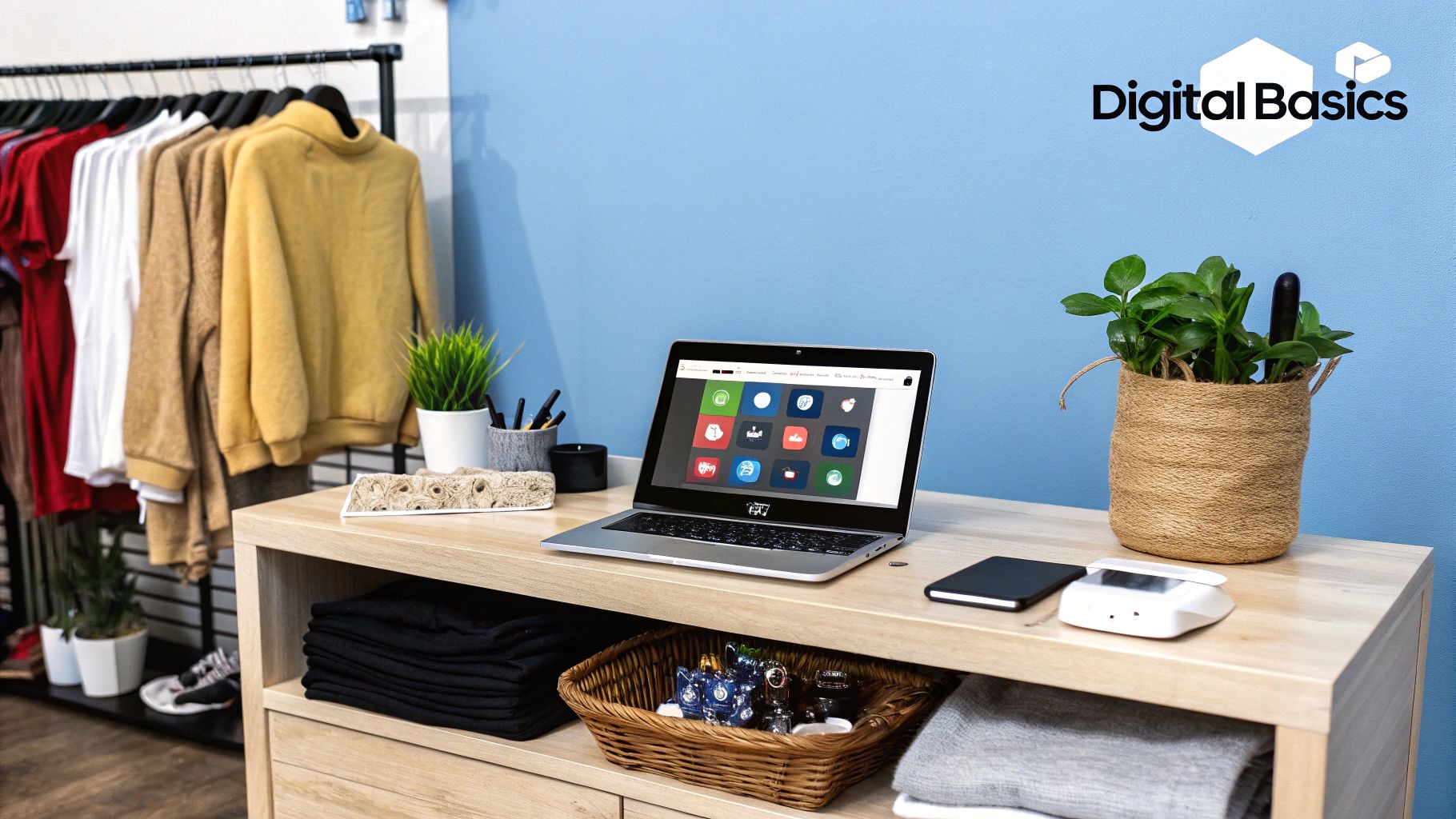
For many small business owners, the very idea of digital marketing can feel overwhelming. But when you strip it all back, it’s about one simple thing: being visible where your customers are already spending their time online.
Think of it like this: your physical shop on a quiet side-street is limited to the occasional passer-by. An effective digital presence is like moving that same shop to the busiest high street in the country. Suddenly, your brand is exposed to thousands of potential customers actively searching for exactly what you offer.
Competing on a Level Playing Field
One of the best things about digital marketing for small businesses is how it levels the playing field. Unlike traditional advertising where big budgets nearly always win, digital channels allow for clever, targeted strategies that can outperform much larger competitors.
A local bakery, for example, can use hyper-targeted social media ads to reach people within a five-mile radius who’ve shown an interest in custom cakes. This is miles more efficient and cost-effective than a generic newspaper ad that hits thousands of uninterested readers. It’s all about working smarter, not just spending more.
Achieving Measurable and Actionable Results
The days of marketing guesswork are long gone. Digital marketing gives you crystal-clear data on what’s working and what isn’t. You can track every click, view, and sale, which means you can understand your return on investment with pinpoint precision.
The real power here lies in making data-driven decisions. By analysing which campaigns drive the most enquiries, you can double down on what works and stop wasting money on tactics that don’t deliver. Every pound spent should contribute directly to your growth.
This focus on tangible results is precisely why digital marketing has become so crucial. UK business owners see online marketing as a direct engine for growth and building customer relationships, and the data backs this up.
Core Digital Marketing Goals for UK Small Businesses
The table below shows what UK small businesses are prioritising in their digital efforts, offering a clear snapshot of their strategic goals.
| Business Goal | Percentage of UK SMEs Prioritising This |
|---|---|
| Increasing sales | 54% |
| Boosting brand awareness | 42% |
| Generating new leads | 36% |
As you can see, the primary focus is on driving direct revenue, followed closely by building a recognisable brand and filling the sales pipeline. These figures confirm a clear shift towards using digital channels for measurable business outcomes. You can explore more UK digital marketing statistics and insights to see the full picture.
Build Your Foundation with Local SEO
Before a customer can walk through your door or click “buy now,” they have to find you. This is where Local Search Engine Optimisation (SEO) becomes the bedrock of your marketing efforts. Think of it as your digital shop sign bright, clear, and telling Google and your community that you’re open for business.
For any small business, this all starts with one indispensable tool: your Google Business Profile (GBP). This free profile is your digital storefront, the first thing potential customers see when they search on Google or look you up on Maps. It’s often the very first interaction a local buyer has with your brand, so you have to make it count.
Mastering Your Google Business Profile
An incomplete or outdated Google Business Profile is like having a sign with the wrong opening hours. It confuses customers and tells Google you might not be a reliable choice. To build a solid local presence, you need to treat your profile with the same care as your physical premises. Getting this right is a non-negotiable first step.
Here’s a simple checklist to get your profile optimised and working for you:
- Accurate NAP Details: Make sure your Name, Address, and Phone number are 100% correct and identical everywhere online. Consistency is key to building trust with search engines.
- High-Quality Photos and Videos: Show, don’t just tell. Upload crisp, professional photos of your work, your team, and your premises. This helps customers see the real business behind the listing.
- Compelling Business Description: Write a clear, concise description of what you do and who you help. Weave in the search terms your ideal customers would actually use, but keep it sounding natural.
- Select a Primary Category: Choose the most accurate category for your main service (e.g., “Plumber,” “Hair Salon”). Then, add secondary categories for everything else you offer.
This diagram shows how crucial local SEO is to building a strong online presence.
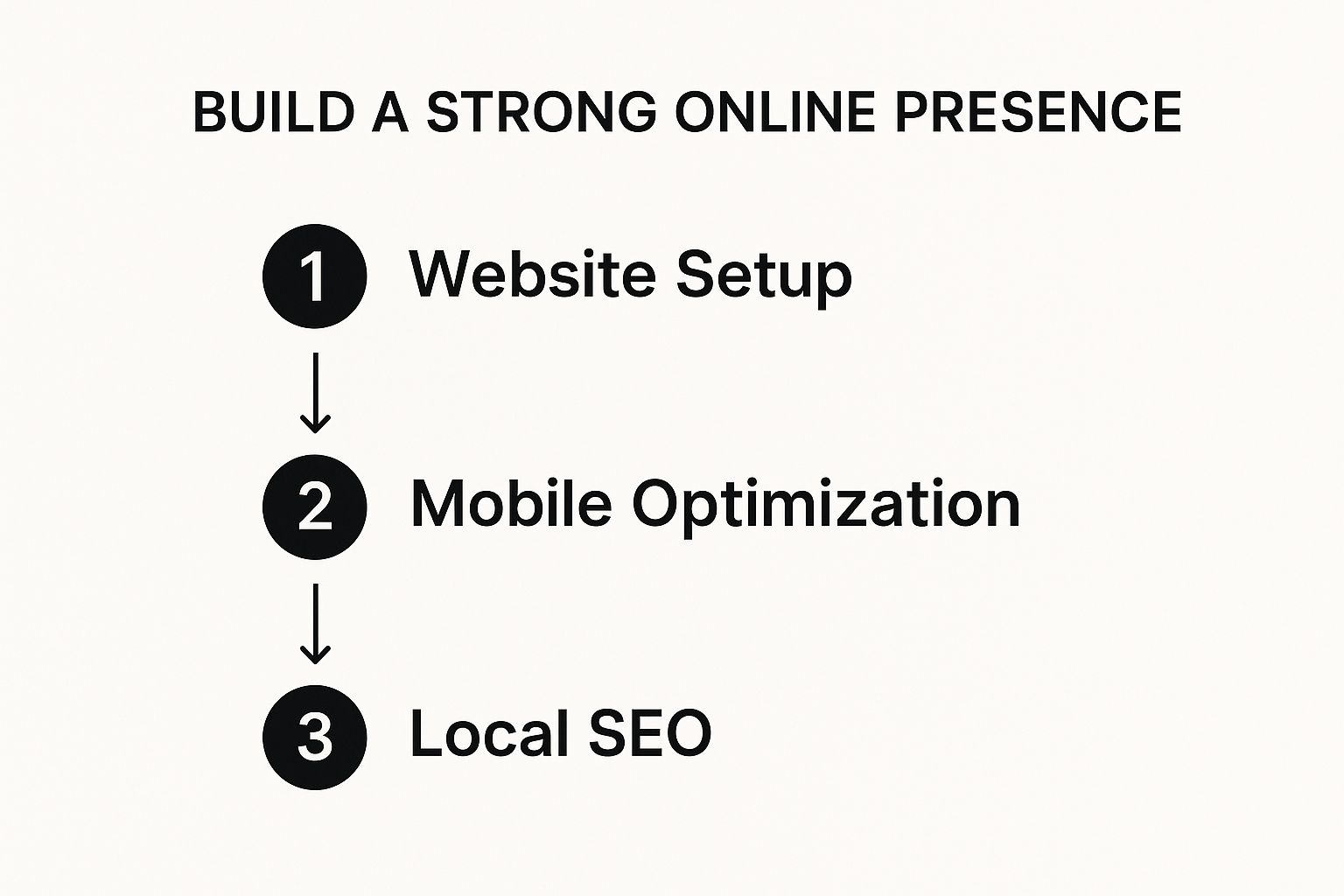
As you can see, having a website is essential, but it’s local SEO that truly connects you with nearby customers who are actively searching for what you sell.
The Power of Customer Reviews
Customer reviews are the lifeblood of local SEO. They’re powerful social proof, signalling to both Google and potential customers that you’re a trustworthy business delivering quality service. A steady stream of positive reviews can have a direct impact on your visibility in local search results.
Don’t just collect reviews; engage with them. Responding to every review good or bad shows you value customer feedback. A thoughtful reply to a negative comment can often turn a poor experience into a public display of excellent customer service.
Actively encouraging happy customers to leave a review is a simple but incredibly powerful marketing tactic. It builds a positive reputation that works for you 24/7. To dive deeper into this, you can explore our detailed guide on local SEO for small business success.
Create Content That Connects and Converts

Getting found online is one thing, but brilliant digital marketing for a small business is about building a genuine connection with your audience. This is where content marketing comes in, transforming a casual search into a meaningful relationship with a potential customer. It’s not about pushy sales pitches; it’s about offering real help and showing your expertise.
Think of your content as a trail of digital breadcrumbs. Each piece a helpful blog post, an engaging social media update, or a behind-the-scenes video guides a potential customer closer to your business. By answering their questions and solving their problems, you build trust long before they even think about making a purchase.
Answer Questions and Build Trust
Right now, your future customers are online asking questions. “How do I fix a leaky tap?” or “What’s the best local cafe for a business meeting?” Your content needs to be the answer. A plumber could write a blog post on spotting common leaks, while a cafe could create an Instagram story showing off its quiet corners and fast Wi-Fi.
This approach positions you as a helpful expert, not just another business trying to make a sale. Over time, this builds authority and makes you the first business people think of when they’re finally ready to buy. Every useful article you create is a chance to increase traffic to your website by being the best answer in a search.
Share Your Content Where It Matters
Creating brilliant content is only half the battle; you need to get it in front of the right people. Social media isn’t just for posting pictures of your lunch it’s for starting conversations and building a community around your brand.
For UK small businesses, a social media presence is non-negotiable. A 2025 study found that 76% actively use Facebook, with Instagram close behind at 63%. While both are essential for visibility, it’s worth noting that Instagram’s visual-first format often drives much higher engagement.
Choosing the right platform is key to getting your message heard. This table breaks down the most popular choices for UK small businesses, helping you focus your efforts where they’ll have the most impact.
| Platform | Percentage of UK SMEs Using It | Best For | Average Engagement Rate |
|---|---|---|---|
| 76% | Building community, customer service, targeted ads | 0.09% | |
| 63% | Visual storytelling, brand personality, influencer collaborations | 1.60% | |
| 55% | B2B networking, thought leadership, professional recruitment | 0.35% | |
| X (Twitter) | 48% | Real-time updates, customer service, breaking news | 0.045% |
As the numbers show, simply being present isn’t enough. The goal is to match your content style to the platform where your audience is most likely to interact, ensuring your hard work doesn’t go unnoticed.
Practical Tips for Getting Started
You don’t need a huge budget or a dedicated team to get started with content. Here are a few practical steps you can take today:
- Find Topic Ideas: Use free tools like Google Trends or AnswerThePublic to see what questions people are asking about your industry. Even better, just listen to the questions your customers ask you every day.
- Create a Simple Calendar: Forget fancy software. A basic spreadsheet outlining what you’ll post each week is all you need to stay on track. Consistency is far more important than frequency.
- Embrace Different Formats: Don’t just stick to text. In a visual world, mastering video marketing for small business is a powerful way to connect with your audience and stand out. Short clips, infographics, and photo galleries can be incredibly effective.
The goal is to create a library of helpful resources that works for your business around the clock. A single blog post can attract new customers for years after it’s published, making it one of the most efficient marketing activities you can undertake.
By consistently creating and sharing valuable content, you nurture potential leads, establish your brand as a trusted authority, and build a powerful, long-term asset for your business’s growth.
Drive Growth with Smart Advertising
While organic strategies like SEO and content marketing build fantastic long-term value, sometimes your business just needs a more immediate boost. Smart advertising is how you get your message in front of a highly targeted audience, fast, driving traffic and leads right when you need them most. It’s a powerful combination of paid ads and direct communication.
Think of it this way: SEO is like earning a brilliant reputation over time through word-of-mouth. Paid advertising, on the other hand, is like buying a primetime commercial slot it gets you noticed instantly. Both are crucial, and when they work together, they create a formidable growth engine for any small business.
Use Paid Ads to Jump the Queue
Paid advertising, often called Pay-Per-Click (PPC), lets you place your business right at the top of Google search results or in the newsfeeds of social media users. The beauty of it is that you only pay when someone actually clicks on your ad, making it a remarkably efficient way to reach customers who are actively looking for what you sell.
The secret to winning at PPC as a small business isn’t a huge budget; it’s precision. Instead of trying to reach everyone, you focus your spending on a very specific group. For example, a local electrician in Guildford could run ads that only show to homeowners within a 10-mile radius who are searching for “emergency electrical repair.” This laser-focus ensures every pound spent has the best possible chance of turning into a valuable lead.
Starting small is key. You don’t need a massive budget to see what works. Set a clear daily limit even £15 or £20 can make a real difference and track your results meticulously. Once you find an ad that brings in profitable customers, you can increase your spend with confidence.
Build Relationships with Email Marketing
Once you’ve got someone’s attention, email marketing becomes your most direct and personal way to communicate. Unlike social media, where mysterious algorithms decide who sees your posts, an email lands straight in a person’s inbox. It’s a direct line to nurture potential customers and turn them into loyal, repeat buyers.
The first step, and it’s non-negotiable, is to build your email list ethically. You can’t just add people without their express permission. Instead, offer them something genuinely valuable in exchange for their email address.
- Offer a Discount: A simple “Get 10% off your first order when you sign up” is a classic for a reason it works.
- Provide a Free Resource: A downloadable guide, checklist, or template that solves a real problem for your audience can be a powerful incentive.
- Run a Contest or Giveaway: Offer a chance to win one of your products or services to people who subscribe.
Building a quality email list is a foundational step for successful campaigns. To maximise the return on your investment, it’s crucial to ensure your list is clean and that the addresses are valid from the outset. Implementing Accurate Email Verification Methods can significantly improve your delivery rates and campaign performance.
With a list in hand, the goal is to provide consistent value, not just constant sales pitches. Send helpful newsletters with industry tips, share behind-the-scenes stories, or give subscribers exclusive early access to sales. This builds a strong relationship, making them far more likely to choose you when they’re ready to buy.
Integrate Your Marketing for Maximum Impact
Think about your marketing channels for a moment: your website, social media profiles, and email campaigns. Each one can deliver results on its own, sure. But when you get them all working together, their combined power isn’t just added it’s multiplied. This is what separates decent marketing from truly great digital marketing.
It’s a bit like a well-rehearsed orchestra. Each instrument has a part to play, but it’s how they all play together in harmony that creates something beautiful. That’s what we’re aiming for: a smooth, cohesive customer journey that feels effortless and builds genuine trust.
Connecting the Customer Journey
An integrated strategy is all about guiding a potential customer from one touchpoint to the next without any friction. It’s about creating a single, unified experience that reinforces your brand message every step of the way, making a much stronger impact than isolated marketing efforts ever could.
Let’s map this out for a local cafe:
- Discovery: Someone scrolling through Facebook sees an ad for the cafe’s new seasonal menu. It catches their eye.
- Engagement: Intrigued, they click the ad and land on a page on the cafe’s website that’s just as appealing as the ad itself.
- Conversion: The website offers a free coffee if they sign up for the email newsletter. It’s a small, easy step.
- Nurturing: A week later, a friendly email arrives, highlighting the cafe’s quiet workspace and free Wi-Fi.
- Reminder: Days later, while walking nearby, they get a timely notification from Google Maps reminding them the cafe is just around the corner.
Notice how this journey feels natural and helpful, not pushy? Each channel seamlessly hands the customer off to the next, building familiarity and making the final decision to pop in feel like their own great idea.
Building a Strong and Recognisable Brand
Consistency is the absolute cornerstone of a strong brand. When your message, tone, and visual style are the same across every platform from your Google Business Profile to your latest Instagram story you become instantly recognisable. That consistency builds a sense of professionalism and reliability that customers trust.
This approach is also incredibly powerful for keeping customers. For UK small businesses, adopting this kind of omni-channel marketing has been a game-changer. Businesses that employ these integrated approaches have reported customer retention rates up to 90% higher than those sticking to single-channel methods. That’s a massive difference. You can read more about these key UK digital marketing trends to see just how much impact this can have.
An integrated strategy ensures your marketing spend works harder. Instead of funding separate, disconnected activities, you’re creating a system where each channel amplifies the others, improving your overall return on investment.
By weaving your marketing activities together, you create a powerful, self-reinforcing system. It not only boosts the performance of each channel but also builds a memorable brand that customers will choose again and again.
Measure What Matters to Improve Your Strategy
Digital marketing shouldn’t feel like guesswork. The real advantage of online channels is that everything is measurable, making your marketing truly accountable. But success isn’t about getting lost in dozens of complex metrics; it’s about focusing on the few that directly impact your business goals.
Think of it as the scoreboard in a football match. You don’t need to track every player’s heart rate to know who’s winning you just need to look at the goals. For a local plumber, a “goal” might be the number of phone calls from their website. For an e-commerce shop, it’s the number of completed sales. These are your Key Performance Indicators (KPIs).
Finding Answers in Your Data
You don’t need expensive software to get started. Free tools like Google Analytics 4 are incredibly powerful for understanding your audience. They can answer fundamental questions that shape your strategy.
- Where are my visitors coming from? This shows you which channels (e.g., Google search, Facebook, email) are driving the most traffic.
- Which pages or posts are most popular? This tells you what content resonates with your audience, so you can create more of it.
- Which devices do people use to visit my site? If most visitors are on mobile, it highlights the importance of a mobile-friendly experience.
Data gives you the power to make smarter decisions. Instead of guessing what works, you can see it clearly and adjust your efforts accordingly. To ensure your digital marketing investments are truly paying off, it’s vital to master calculating marketing ROI that actually matters.
The core idea is simple: find out what’s working and do more of it. Find out what isn’t working and either improve it or stop spending time and money on it.
A straightforward framework is to check your key numbers weekly or fortnightly. This regular review keeps you connected to your performance and allows for agile adjustments, ensuring your digital marketing for small businesses stays on track. For a more detailed breakdown, you can learn more about how to measure marketing ROI in our guide.
Frequently Asked Questions
Diving into digital marketing for your small business always brings up a few common questions. We hear them all the time from business owners just like you. Here are some straight, practical answers to help clear things up and get you moving forward with confidence.
How Much Should a Small Business Budget for Digital Marketing in the UK?
It’s the million-dollar question, isn’t it? A popular rule of thumb is to set aside 5-10% of your total revenue for marketing. But let’s be realistic if you’re just starting out, that figure can feel completely out of reach.
The trick is to start small and smart. Before you spend a penny, make sure you’ve squeezed every drop of value out of free tools like your Google Business Profile. From there, you can launch a simple blog that answers your customers’ most common questions, or get active on the one or two social media channels where they actually hang out.
When you’re ready for paid ads, you don’t need a huge budget. Start with something modest, maybe £10-£20 a day on tightly focused local ads. Once you see a clear, positive return, you can scale things up.
I Have No Time for Marketing. What Is the One Thing I Must Do?
If you’re stretched thin and can only focus on one thing, make it Local SEO. More specifically, claim and meticulously complete your Google Business Profile (GBP). Think of it as your digital shopfront; it’s often the very first impression a local customer gets of your business.
Get the basics perfect: your name, address, phone number, and opening hours must be spot-on. Upload high-quality photos of your premises, your products, and your team. And most importantly, get into the habit of asking happy customers for reviews and make sure you respond to all of them, good or bad. A polished GBP takes a bit of effort to set up, but it’s a powerful, free asset that can drive real footfall and phone calls with minimal ongoing work.
Which Social Media Platform Is Best for My Business?
The best platform is, without fail, the one your customers are already using. It’s a classic mistake to stretch yourself thin trying to be everywhere at once. That’s a recipe for burnout and poor results. You have to be strategic.
If you sell directly to consumers (B2C) think retail shops, restaurants, or salons Facebook and Instagram are usually fantastic choices. They’re visual, highly engaging, and have massive user bases. On the other hand, if your business serves other businesses (B2B), like a consultancy or a supplier, LinkedIn is almost always the smarter bet for professional networking and generating high-quality leads. The goal isn’t to be on every platform; it’s to master one or two.
Do I Need a Website If I Have a Facebook Page?
Yes, you absolutely do. Treating your Facebook page as a substitute for a proper website is a massive risk. Your social media profiles are built on rented land. Facebook could change its algorithm, its policies, or even its entire business model tomorrow, and your access to the audience you’ve spent years building could vanish overnight.
Your website is your owned digital property. It is the central hub of your online presence, giving you 100% control over your branding, messaging, and customer data. Use social media as a tool to drive traffic to your website, where the real business of conversion happens.
How Long Does It Take to See Results from Digital Marketing?
This really depends on the channels you’re using. It helps to think about results in two different timeframes: short-term wins and long-term growth.
- Short-Term Results: Paid advertising, like Google Ads or promoted social media posts, can start delivering traffic, leads, and even sales almost immediately. You pay for visibility, and you get it fast.
- Long-Term Growth: Organic strategies like SEO and content marketing are more like planting a tree. They’re an investment in your business’s future. It can easily take 3-6 months, sometimes longer, to see a real shift in your search rankings and organic traffic.
The most effective digital marketing strategies strike a balance. Paid ads can bring in quick wins and teach you a lot about your customers, while your organic efforts build a strong, sustainable foundation for profitable growth that lasts for years.
Ready to stop guessing and start growing? The team at GFC Tech specialises in creating practical digital marketing strategies for small businesses across Surrey. We handle the technical details so you can focus on what you do best. Contact us at GFC Tech to schedule your free consultation today.
Adam is a Founder of GFC Tech, a company dealing in SEO and website design and development services. Adam has been an SEO expert for the past 8 years and has been working with different companies in this field. He is an SEO consultant and a marketing strategist and works closely with his clients to ensure that his marketing plans and strategies provide them with the marketing advantages they need to grow their business. Adam’s main role is an SEO consultant, but he is also involved in all technical aspects. Adam also develops WordPress websites, designs them professionally and performs SEO for them so they can rank on the first page of google.


