
When someone lands on your website after typing a query into Google or Bing and clicking on a non-advertisement link, that’s organic traffic. They didn’t click on a paid ad; they found you naturally because your site offered the best answer to their question.
Think of it as earning visitors through your reputation rather than paying to get their attention.
- Understanding What Organic Traffic Really Is
- Why Organic Traffic Is Your Most Powerful Asset
- How Search Engines Deliver Organic Visitors
- Comparing Organic Traffic to Other Channels
- How to Measure Your Organic Traffic Performance
- Proven Strategies to Increase Your Organic Traffic
- Common Questions About Organic Traffic
- Frequently Asked Questions
Understanding What Organic Traffic Really Is
Picture your website as a shop on a bustling high street. Every day, thousands of people walk by, each looking for something specific. Organic traffic is the stream of visitors who walk into your shop because they liked your window display (your search result listing) or because a trusted source (Google) told them you had exactly what they were looking for.
These aren’t people you paid to show up. They found you on their own, driven by a genuine need. That self-motivated interest is precisely what makes organic traffic so valuable. Unlike paid traffic, which vanishes the second you stop paying for ads, organic traffic builds on itself. It’s the long-term result of consistently providing useful, relevant information that search engines trust enough to recommend.
“Organic traffic is like having a shop in a busy area people walk in because they’re interested, not because you paid for them to show up.”
Essentially, it’s a powerful vote of confidence in your website’s authority. When you rank highly, it signals to both search engines and users that you are a credible, trustworthy source. This creates a solid foundation for sustainable, long-term growth.
Key Characteristics of Organic Visitors
So, what makes these visitors special? It boils down to a few key traits:
- High Intent: These people are actively searching for a solution, product, or answer that you provide. They’re already halfway to a decision.
- Trust-Driven: Users tend to trust organic search results more than paid ads, viewing them as more authentic and less biased.
- Cost-Effective: While it requires an upfront investment in quality content and SEO, there’s no direct cost per click. You’re not paying for every single visit.
- Sustainable: A well-ranked page can act like a digital asset, continuing to attract visitors and generate leads for months or even years with minimal ongoing effort.
Getting to grips with this concept is the first, most crucial step toward building a powerful, long-lasting online presence.
Why Organic Traffic Is Your Most Powerful Asset
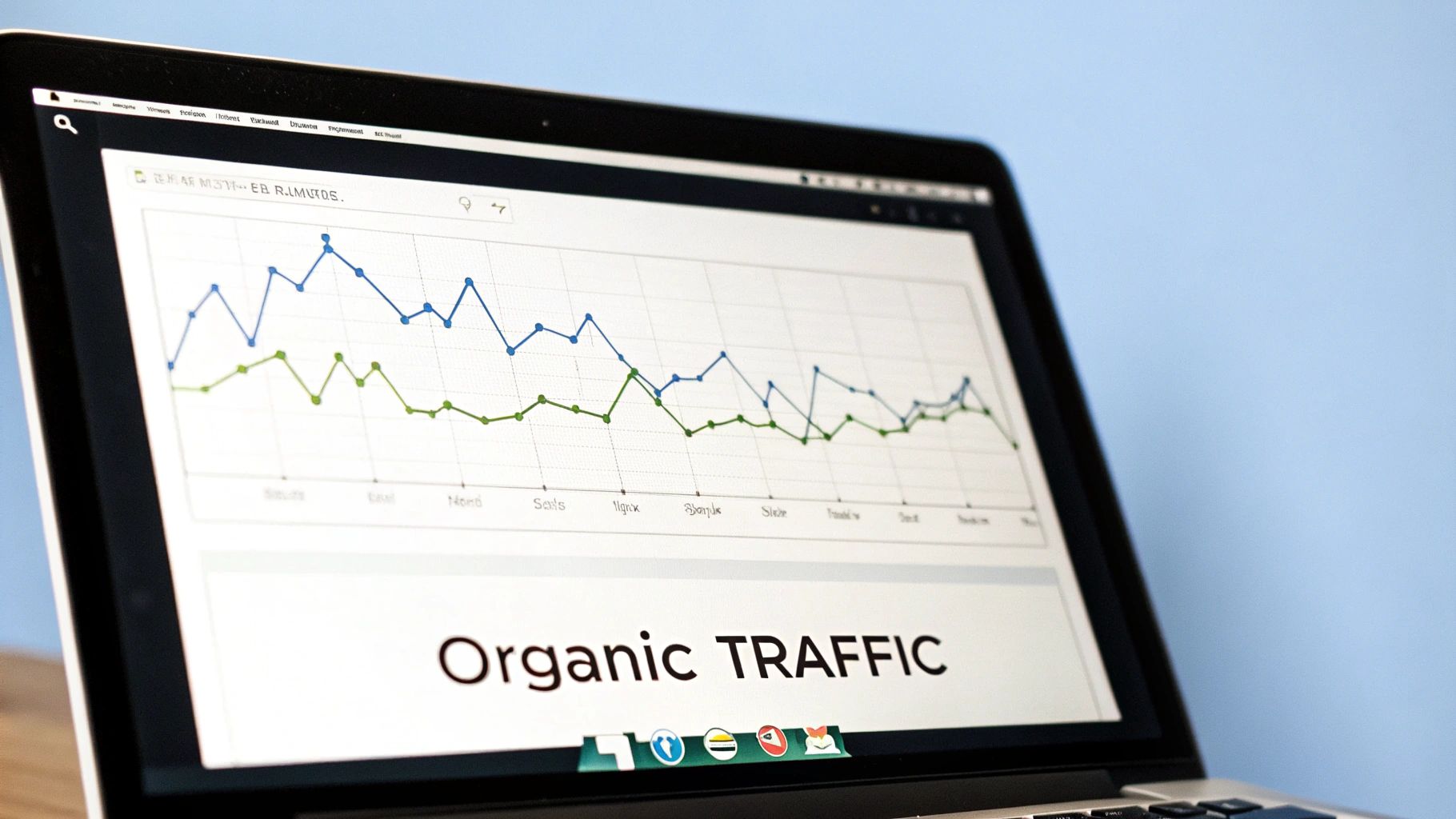
Organic traffic is so much more than a number on a dashboard; it’s the engine for genuine, sustainable business growth. Why? Because it brings visitors to your site who are actively searching for the exact solutions, products, or information you provide. They don’t just stumble across you; they arrive with a problem to solve, making them highly qualified leads from the very first click.
Think of it like building a solid reputation in your community. Every time your website appears at the top of the search results, it’s like getting a trusted referral. People instinctively see high organic rankings as a vote of confidence from Google, immediately positioning you as a credible authority in your field.
A Sustainable Engine for Growth
Investing in SEO to grow your organic traffic is like planting a tree, not just buying a bouquet. Unlike paid ads that vanish the moment you stop paying, a well-optimised page is an asset that keeps delivering value long after the initial work is done. It appreciates over time, generating a consistent flow of leads without the ongoing cost-per-click.
This makes it a cornerstone of any smart growth plan, integrating perfectly with other essential small business growth strategies. The numbers back this up: SEO leads close at an average rate of 14.6%, miles ahead of the 1.7% you’d typically see from outbound marketing. It’s an investment that pays compounding dividends.
In the UK, SEO converts 84.62% more users than pay-per-click (PPC) advertising and delivers an impressive return, demonstrating its financial viability for small businesses.
Ultimately, focusing on organic traffic means building a resilient foundation for your business. You reduce your reliance on expensive paid channels and forge a direct connection with an audience that is already out there, actively looking for you. A simple step like learning how to write compelling meta descriptions can make all the difference in turning a searcher into a visitor.
How Search Engines Deliver Organic Visitors
Ever wondered what happens between typing a question into Google and getting a list of answers? It’s not magic, but a highly organised process that connects your content with people looking for it. Think of a search engine as a massive digital librarian, constantly working to catalogue the entire internet.
This librarian’s job happens in three key stages: crawling, indexing, and ranking. Each step is crucial in turning a simple search query into a visitor on your website. Understanding this process is the first step to improving your visibility and attracting more organic traffic.

Crawling and Indexing Your Content
First, search engines send out automated bots, often called spiders or crawlers, to explore the web. These little digital explorers follow links from page to page, discovering new and updated content along the way.
Once a crawler finds a page, it analyses everything text, images, videos and stores a copy in a colossal database known as an index. If your page isn’t in the index, it’s completely invisible to searchers. Simple as that.
This process is enormous in scale. To keep up, search engines must constantly crawl billions of pages to ensure their index is fresh and accurate, making sure users get the most current information available.
Ranking the Best Results
When you search for something, the search engine doesn’t scan the live web in real time. Instead, it blitzes through its pre-organised index to pull up every relevant page it has on file. Then the most complex part begins: ranking.
Sophisticated algorithms analyse hundreds of factors to decide which pages are the most authoritative and relevant answers to your query. The big signals include:
- Relevance: How closely does the page content match what the searcher actually intended to find?
- Authority: How many other reputable websites link to this page, vouching for its quality?
- User Experience: Is the page secure, mobile-friendly, and quick to load? A slow, clunky site won’t make the cut.
This sophisticated system is what drives the entire organic search ecosystem. For instance, data from major SEO tool providers shows that Google organic search accounts for a hefty 17.7% of visits even to well-known sites that get most of their traffic directly, highlighting the enduring power of a high ranking. You can learn more by checking out Ahrefs’ traffic statistics and insights on sqmagazine.co.uk.
Comparing Organic Traffic to Other Channels
To really get a grip on what makes organic traffic so valuable, it helps to see where it fits in the bigger marketing picture. While organic search is an absolute powerhouse, a truly resilient online presence doesn’t put all its eggs in one basket. Instead, it relies on several different traffic sources working together, each playing a unique role.
Think of it like a football team. Organic search is your star striker, the one who consistently scores goals over the long haul. But you can’t win a match with just a striker. You need your defenders, midfielders, and a goalie too. Channels like paid ads, direct visits, and social media are those essential teammates, each bringing a different strength to the game.
Key Traffic Channels Explained
Every way a visitor can land on your site has its own pros and cons, especially when it comes to cost, how quickly you see results, and what the user is actually looking for.
- Paid Traffic (PPC): This is anyone who arrives by clicking an ad, like the ones you see at the top of Google. You pay for every single click, which gets you instant visibility. It’s fast and effective, but the moment you stop paying, the traffic stops dead.
- Direct Traffic: These are your loyal fans the people who type your website address straight into their browser or click on a bookmark they’ve saved. This is a brilliant sign of strong brand recognition and customer loyalty.
- Referral Traffic: When someone clicks a link from another website to get to yours, that’s referral traffic. It could be from a blog that mentioned you or a partner’s website. It’s the digital equivalent of a word-of-mouth recommendation.
- Social Traffic: As the name suggests, this covers anyone coming from social media platforms like LinkedIn, Facebook, or Instagram. They might have clicked a link in your bio or one you shared in a post.
Below, we’ve broken down how these different traffic sources stack up against each other.
Website Traffic Sources at a Glance
This table gives a quick comparison of the main traffic channels, highlighting what makes organic search such a cornerstone for long-term growth.
| Traffic Source | Primary Driver | Cost | User Intent | Speed of Results |
|---|---|---|---|---|
| Organic | High-quality content & SEO | Time & resource investment | High (Actively seeking solutions) | Slow to build, but sustainable |
| Paid (PPC) | Advertising budget | High (Pay-per-click) | High (Ready to purchase) | Immediate |
| Direct | Brand recognition & loyalty | Low (Earned over time) | Very High (Knows your brand) | Varies (Builds with brand) |
| Referral | Links from other websites | Low (Earned through relationships) | Varies (Depends on context) | Varies |
| Social | Social media engagement | Varies (Organic vs. paid posts) | Low to Medium (Browsing) | Can be immediate (viral) or slow |
While paid ads deliver a quick burst of energy and social media helps build community, organic remains the steady, reliable engine for growth.
The infographic below shows the core activities that fuel a healthy organic strategy, proving it’s a discipline with many moving parts.
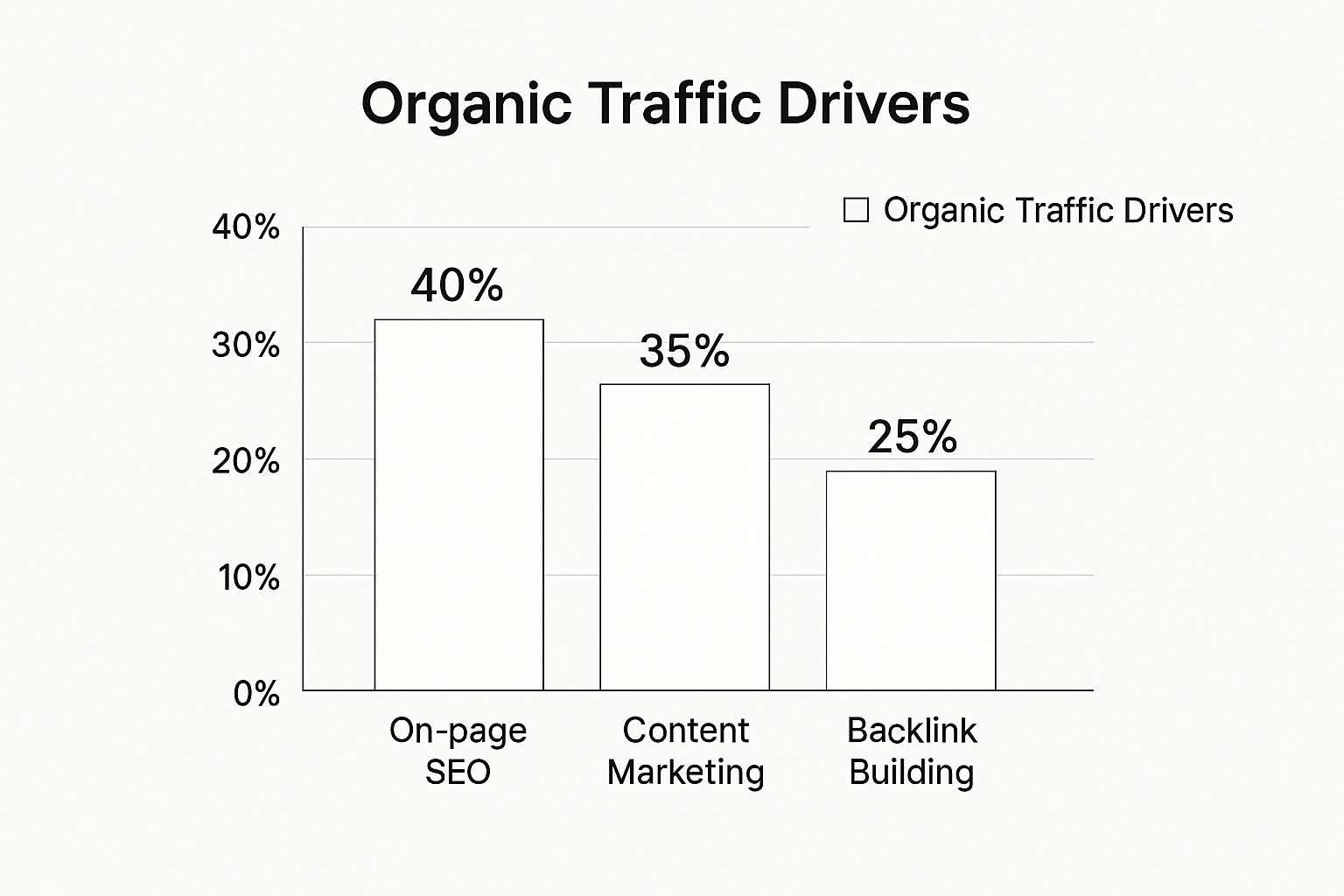
Just as a good SEO strategy needs a mix of technical work, great content, and authority building, a healthy marketing plan needs to balance its organic efforts with other channels. This blended approach is what creates robust, sustainable growth that can weather any storm.
How to Measure Your Organic Traffic Performance
Getting visitors to your site is one thing, but understanding what they do once they arrive is where the real magic happens. To get a proper sense of your organic traffic’s health, you need to dig deeper than just the raw visitor numbers and start reading the story your data is telling. This is where tools like Google Analytics become invaluable, turning abstract figures into clear, actionable insights.
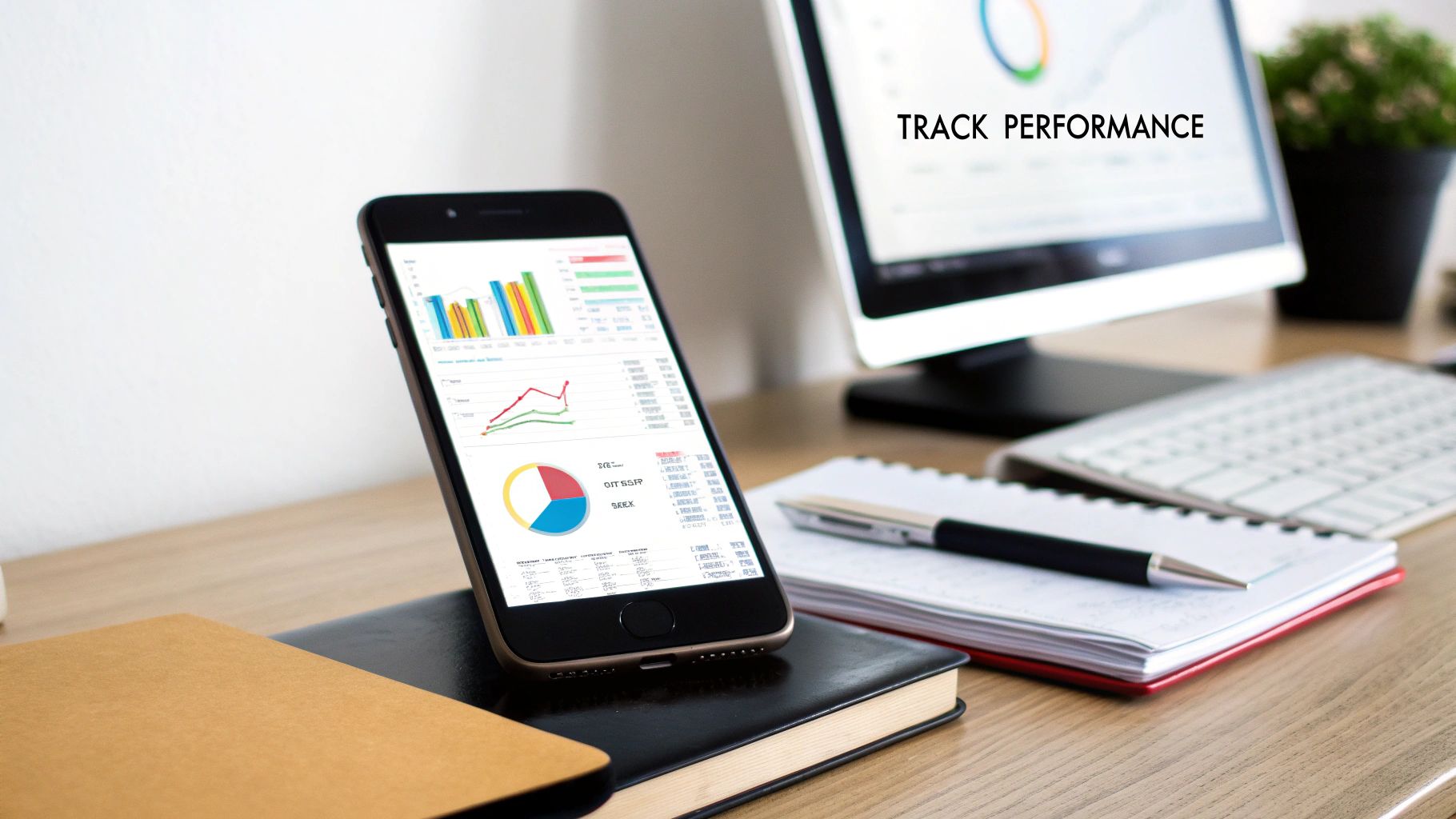
By tracking the right metrics, you can figure out if your content is genuinely connecting with your audience or if visitors are hitting the back button, unimpressed. It’s how you prove the tangible business value of all your SEO work.
Key Metrics That Tell the Full Story
Think of these numbers as your website’s vital signs. They show you exactly how engaged your organic visitors are and whether your content is hitting the mark.
- Bounce Rate: This is the percentage of people who land on one of your pages and leave without clicking anywhere else. A high bounce rate could be a red flag, suggesting your content wasn’t what they were looking for or the page itself offered a poor experience.
- Pages per Session: This metric tells you the average number of pages someone looks at during a single visit. A higher number is usually a great sign, indicating your content is compelling enough to make people stick around and explore.
- Conversion Rate: This is the big one the ultimate measure of success. It tracks the percentage of visitors who take a desired action, whether that’s filling out a contact form, signing up for your newsletter, or buying a product.
Keeping an eye on these signals helps you fine-tune your entire strategy. For example, in the UK, the top organic result on Google gets an average click-through rate (CTR) of 22.4%. Nailing that top spot is incredibly valuable, and learning to interpret what users do after they click allows you to focus on keywords that actually convert, not just attract eyeballs.
Of course, knowing how to perform effective keyword research is fundamental to improving these metrics, as it makes sure you’re attracting the right crowd from the get-go.
Proven Strategies to Increase Your Organic Traffic
Knowing what organic traffic is and why it matters is one thing; actually growing it is another. Turning theory into action is where the real growth happens. At its core, increasing your organic traffic boils down to a consistent, focused effort across the three core pillars of Search Engine Optimisation (SEO).
The first pillar is On-Page SEO. This is all about what’s actually on your website pages. It involves creating genuinely useful, relevant content that answers the questions your audience is asking, then optimising those pages with the right keywords, clear headings, and compelling descriptions to signal their value to search engines.
Next up is Off-Page SEO, which is all about building your website’s authority and credibility from the outside in. This is mainly about earning valuable backlinks from other reputable sites, which act like votes of confidence or endorsements for your content.
The Technical Foundation
Finally, there’s Technical SEO. This pillar is the bedrock your site is built on. It ensures your website is fast, secure, and easy for search engine crawlers to read and understand. A solid technical foundation means users have a smooth experience, and search engines can index your content without hitting any roadblocks.
A successful SEO strategy is never about just one thing. It’s the combined power of great content, strong authority, and a flawless user experience that drives sustainable organic growth.
These three pillars don’t work in isolation; they support each other to create a powerful engine for attracting organic visitors. For a much deeper dive into the nuts and bolts, you can learn how to increase traffic on your website in our detailed guide. Mastering these fundamentals is the most reliable path to better visibility and consistent growth.
Common Questions About Organic Traffic
To wrap things up, let’s tackle some of the questions we hear most often when business owners start digging into organic traffic. These answers should clear up a few common sticking points and help you decide on your next move.
How Long Does It Take to Increase Organic Traffic?
Growing organic traffic is a marathon, not a sprint. While you might spot some small wins in a few weeks, most businesses see significant, meaningful results within 4 to 12 months.
This isn’t a hard and fast rule, of course. The timeline depends heavily on things like how competitive your industry is, your website’s history, and how consistently you’re applying sound SEO practices.
Is Organic Traffic Really Free?
This is a big one. While you don’t pay per click like you do with ads, organic traffic isn’t truly “free”. Think of it as an investment.
It requires a strategic commitment of time and resources to create valuable content, properly optimise your website, and build genuine authority. That said, it’s widely considered one of the most cost-effective marketing channels for delivering long-term ROI.
Should I Only Focus on Organic Traffic?
Relying on a single channel for all your leads is a risky game. While organic traffic is a powerful, compounding asset, the most resilient marketing strategies are always diversified.
Combining your SEO efforts with paid advertising, social media, and email marketing creates a powerful synergy. Each channel ends up supporting and strengthening the others, leading to more comprehensive and stable growth.
How Does a Blog Help Increase Organic Traffic?
A blog is one of the single most effective tools for boosting organic traffic. Every new article you publish is another chance to rank for relevant keywords that your customers are searching for.
Each post helps answer your audience’s questions and can attract valuable links from other websites. More importantly, it consistently signals to search engines that your site is an active, authoritative source of information in your field.
What Is the Difference Between Organic and Direct Traffic?
It’s easy to mix these two up. Organic traffic comes from users who find you after typing a query into a search engine and clicking on one of the unpaid results.
Direct traffic, on the other hand, includes visitors who type your website address directly into their browser or click on a bookmark. High direct traffic often points to strong brand recognition, while high organic traffic shows you have strong visibility in search results.
Ready to turn these insights into measurable growth for your business? At GFC Tech, we specialise in creating bespoke SEO and web design strategies that drive high-quality organic traffic. Discover how our services can help your Surrey-based business thrive online at https://gfctech.co.uk.
Frequently Asked Questions
1. What makes organic traffic so valuable?
Its value comes from user intent. These aren’t passive browsers; they are active searchers looking for answers or solutions you offer. This results in higher engagement, better conversion rates, and a huge boost in brand trust.
2. Is organic traffic more credible than paid ads?
Yes, most users view organic search results as more trustworthy than paid ads. A high ranking feels like an endorsement from the search engine, signalling that your content is relevant and authoritative, not just paid for.
3. Does organic traffic have a better ROI than paid traffic?
Generally, yes. While SEO requires an upfront investment of time and resources, it often delivers a much higher long-term return. You aren’t paying for every single click, and a single piece of content can generate traffic for years.
4. How do I track conversions from organic traffic?
Inside Google Analytics, you can set up “Goals” to track specific actions like form fills or downloads. This lets you filter your reports to see precisely how many conversions are coming from visitors who found you through organic search.
5. Can a small business compete for organic traffic against larger companies?
Absolutely. By focusing on niche keywords, local SEO, and creating high-quality content that serves a specific audience, small businesses can effectively compete and even dominate search areas that larger, more generic competitors often overlook.
Adam is a Founder of GFC Tech, a company dealing in SEO and website design and development services. Adam has been an SEO expert for the past 8 years and has been working with different companies in this field. He is an SEO consultant and a marketing strategist and works closely with his clients to ensure that his marketing plans and strategies provide them with the marketing advantages they need to grow their business. Adam’s main role is an SEO consultant, but he is also involved in all technical aspects. Adam also develops WordPress websites, designs them professionally and performs SEO for them so they can rank on the first page of google.


