

To get your website climbing the Google rankings, you need to stop thinking in silos and start building a balanced strategy. It all comes down to four core pillars: creating high-quality content that genuinely helps people, ensuring your website is technically sound so Google can crawl it without a hitch, earning authoritative backlinks from sites people trust, and delivering a great user experience that keeps visitors engaged. Get these right, and you’re sending all the right signals to Google that your site deserves to be at the top.
Why Ranking On Google Still Matters in the UK

Before we dive into the nuts and bolts, let’s get one thing straight: putting in the effort to rank on Google is more critical than ever, especially for businesses here in the UK. Google isn’t just a search engine; it’s the default starting line for nearly every online journey, whether someone is searching for a local plumber in Guildford or researching a major B2B purchase. For British businesses, being visible on Google means being visible, period.
The numbers are staggering. As of 2025, Google dominates a colossal 93.3% of the UK search engine market. That means if you’re not on Google, you’re invisible to almost all of your potential customers. Competitors like Bing and DuckDuckGo are barely a blip on the radar, making Google the only game in town if you’re serious about growth. You can dig deeper into these numbers in this detailed search engine report.
The Evolving Search Landscape
It’s not just about where people search, but how. The rise of AI and voice-activated assistants is completely reshaping search behaviour. It’s predicted that by 2025, voice search will make up half of all searches in the UK. This seismic shift means simply targeting old-school keywords won’t cut it anymore.
Your strategy now has to account for:
- Conversational Queries: People talk differently than they type. Your content needs to answer questions phrased in natural, everyday language.
- Local Intent: So many voice searches are for local needs, like “find a coffee shop near me.” This makes a perfectly optimised Google Business Profile non-negotiable for any brick-and-mortar business.
- AI-Powered Results: Google’s AI is getting scarily good at understanding context. It rewards content that provides direct, thorough answers, not keyword-stuffed fluff.
The big takeaway? You need to stop thinking like a marketer trying to game an algorithm and start acting like a helpful expert providing the best possible answer to a real person’s question. This mindset is the cornerstone of modern SEO.
Finding Keywords That Connect With Your Audience
If you want to improve your Google rankings, you first need to speak your customers’ language. I’ve seen countless businesses obsess over collecting a massive list of keywords, but effective SEO isn’t about that. It’s about understanding the user intent the real-world problem or question behind every single search.
Getting this right is the foundation of any SEO strategy that actually works. Think of it this way: your content is the answer, but if you don’t know the question, you’re just shouting into an empty room. This means we need to move beyond broad, high-competition keywords and dig into the specific phrases that signal what a user really wants.
Decoding User Intent
User intent usually falls into a few key buckets. Once you get a feel for them, you can create content that perfectly matches what someone is looking for at that exact moment.
Let’s take a UK-based financial advisor as a real-world example. They’ll encounter different types of intent:
- Informational: A user searching for “how does a stocks and shares ISA work” isn’t ready to invest. They need a clear, educational guide that explains the concept without jargon. This is your chance to build trust and position yourself as the expert.
- Transactional: On the other hand, someone searching “best ISA for first-time buyers UK” is much closer to making a decision. They are actively looking for comparisons, recommendations, and a clear path to opening an account.
Trying to satisfy both with a single page is a recipe for a high bounce rate. Creating separate, focused pieces of content is essential, as it tells Google your page is a great match for that specific query.
Your goal is to build a smart keyword strategy that ensures every piece of content you create meets a genuine user need. This is precisely what Google’s algorithm is designed to reward.
Uncovering The Right Keywords
So, how do you find these valuable keywords? While premium tools like Ahrefs and SEMrush are brilliant, you can uncover some incredible insights using completely free methods. And honestly, Google itself is your best starting point.
Start by typing a core service or topic into the Google search bar and watch what Google Autocomplete suggests. These are real, popular searches happening right now. Also, pay close attention to the “People Also Ask” (PAA) boxes in the search results. These are absolute goldmines for long-tail keywords, giving you direct insight into the exact questions your audience is asking. If you want a more structured approach, you can learn more about https://gfctech.co.uk/how-to-find-seo-keywords-for-your-website/ with our in-depth guide.
To take this a step further, it’s incredibly useful to see what keywords your competitors rank for that you don’t. A great way to do this is by performing a content gap analysis. This process reveals the topics and questions your rivals are answering successfully, giving you a clear roadmap for new content that will fill those gaps and attract their audience to you instead.
Creating Content That Google and Users Love
Once you’ve nailed down the exact phrases your customers are using, it’s time to build something that genuinely answers their questions. This is the heart of on-page SEO. It’s all about creating and structuring your content so that both people and Google see its value.
Forget the old days of stuffing keywords into every spare gap. Modern SEO is about user experience. The goal is simple: create content so helpful and authoritative that Google wants to show it to people. Let’s walk through this with a real-world example: a blog post aiming to rank for “eco-friendly UK travel destinations.”
Crafting Click-Worthy Titles and Descriptions
Think of your page title and meta description as your shop window in the search results. They’re your first and only chance to convince someone to click on your link over all the others. A compelling one can rocket your click-through rate (CTR), which is a huge signal to Google that your result is a great match.
A generic title like “Eco Travel” just won’t cut it. It’s weak and tells the user nothing. Something like this, however, is much stronger:
Eco-Friendly UK Travel Destinations: 10 Sustainable Stays
This title works because it’s specific, includes the main keyword, and the number grabs your attention.
Your meta description then needs to seal the deal by spelling out the benefit. Instead of a bland, forgettable sentence, try this:
“Discover breathtaking eco-friendly travel destinations across the UK. From carbon-neutral cottages in Cornwall to sustainable glamping in Scotland, plan your next green getaway with our guide.”
A great title and meta description instantly answer two questions for the user: “Is this what I’m looking for?” and “Why should I click this one?” Get that right, and you’re already one step ahead.
Structuring Content for Clarity and SEO
A well-structured page is a dream for users to scan and a piece of cake for Google to understand. You achieve this by using heading tags (H1, H2, H3) to create a clear, logical flow.
- H1 Tag: This is your main page title. There should only be one H1 tag per page, and it must contain your primary keyword. For our example:
<h1>Eco-Friendly UK Travel Destinations: 10 Sustainable Stays</h1> - H2 Tags: Use these for the main sections of your article. They should support your main keyword and break the content into digestible chunks. Think:
<h2>Why Choose an Eco-Friendly Holiday?</h2>or<h2>Our Top Eco-Friendly Destinations in England</h2>. - H3 Tags: These break your H2 sections down even further. So, under the England section, you might have:
<h3>The Cotswolds: Green Villages and Farm Stays</h3>and<h3>Cornwall: Coastal Conservation Projects</h3>.
This structure doesn’t just look neat; it creates an outline that helps people find what they need fast and shows Google the depth of your knowledge on the topic.
Demonstrating Expertise, Authoritativeness, and Trustworthiness
Google is on a mission to rank content from sources that genuinely know their stuff. This idea is commonly known as E-A-T (Expertise, Authoritativeness, and Trustworthiness). Here’s how you can build it into your content:
- Go Deep with Accurate Details: Don’t just list places. Explain why they’re eco-friendly. Mention specific certifications, local conservation projects, or the sustainable materials used. This is what separates expert content from amateur lists.
- Link to Reputable Sources: If you mention a specific eco-certification, link out to its official site. This shows you’ve done your homework and backs up your claims.
- Weave in Internal Links: Link from your new post to other relevant articles on your own site, like a guide to “sustainable travel packing.” This keeps visitors on your site longer and shows Google how all your content connects, cementing your site as an authority on the topic. For businesses in professional services, building trust through high-quality content is everything. You can learn more in this ultimate guide to content marketing for professional services.
And don’t forget your images. Every single one needs descriptive alt text. Instead of alt="image1.jpg", write something like alt="A wooden eco-lodge surrounded by green forest in the Scottish Highlands." This helps Google “see” the image and is crucial for visually impaired users.
Building a Rock-Solid Technical SEO Foundation
Amazing content and smart keywords are vital parts of the puzzle, but they mean very little if Google’s crawlers can’t find, access, or understand your website. This is where technical SEO comes in. It’s the engine under the bonnet, ensuring your site is a smooth, efficient machine that search engines can easily navigate.
Think of it like building a house. You wouldn’t put up expensive wallpaper and furniture before ensuring the foundations, plumbing, and wiring were perfect. Technical SEO is your website’s foundation, and getting it right removes critical barriers that could be holding back your Google rankings.
Is Google Indexing Your Site Correctly?
First things first, you need to confirm that Google can even see your pages. The best place to check this is in Google Search Console, a free and indispensable tool for any website owner.
Inside Search Console, head to the ‘Pages’ report under the ‘Indexing’ section. This report tells you exactly which of your pages Google has successfully indexed and, more importantly, which ones it hasn’t and why. If you see a large number of ‘Crawled – currently not indexed’ or ‘Discovered – currently not indexed’ pages, it’s a red flag that needs investigation.
Another essential element is your XML sitemap. This is essentially a roadmap of your website that you submit to Google, making it easier for its bots to find all your important content. Ensure your sitemap is up-to-date and has been submitted through Search Console.
Page Speed and Core Web Vitals
How quickly your page loads is a confirmed ranking factor. A slow site frustrates users and sends negative signals to Google. Your focus should be on Core Web Vitals, a set of specific metrics Google uses to measure user experience.
These three metrics are the bedrock of modern user experience optimisation. Getting them right is non-negotiable for anyone serious about ranking.
| Metric | What It Measures | Good Score | Needs Improvement | Poor Score |
|---|---|---|---|---|
| Largest Contentful Paint (LCP) | Loading performance | Under 2.5 seconds | 2.5s – 4.0s | Over 4.0s |
| First Input Delay (FID) | Interactivity | Under 100 milliseconds | 100ms – 300ms | Over 300ms |
| Cumulative Layout Shift (CLS) | Visual stability | 0.1 or less | 0.1 – 0.25 | Over 0.25 |
You can check your scores for free using Google’s PageSpeed Insights tool. It will provide a detailed breakdown of issues, such as large images or render-blocking code, that you can fix to improve your speed.
This is a core component of any professional technical SEO service, as it directly impacts both rankings and user satisfaction.
A fast, mobile-friendly website is no longer a ‘nice-to-have’; it’s a fundamental requirement for competing in search results. Google prioritises sites that deliver a smooth experience, especially for users on mobile devices.
Enhancing Your Site with Structured Data
Structured data, often called Schema markup, is a piece of code you add to your site to help Google better understand your content’s context. It’s what powers those eye-catching “rich snippets” in search results, like star ratings, event dates, or recipe times.
For instance, if you’re a local business, you can use LocalBusiness schema to clearly tell Google your address, opening hours, and phone number. This information can then appear directly in search results, making your listing far more prominent and helpful. Implementing schema can give you a significant advantage and improve your click-through rate.
Part of building a rock-solid technical SEO foundation involves implementing an effective URL strategy that is both user-friendly and search engine friendly. Clean, logical URLs help both users and crawlers understand your site’s structure.
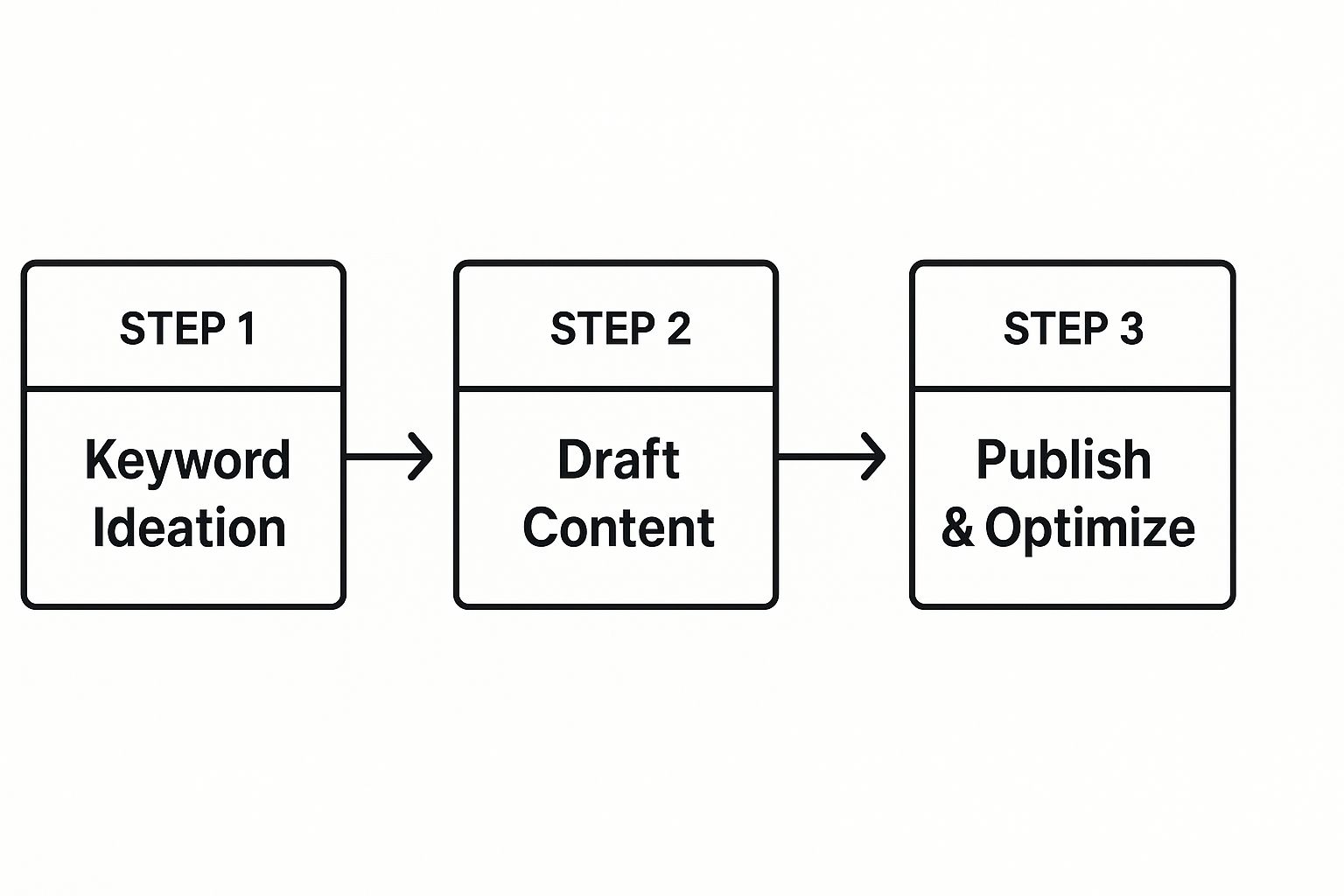
This flow highlights that the journey doesn’t end at publishing; continuous optimisation is key to maintaining and improving rankings.
Earning Backlinks That Build Real Authority
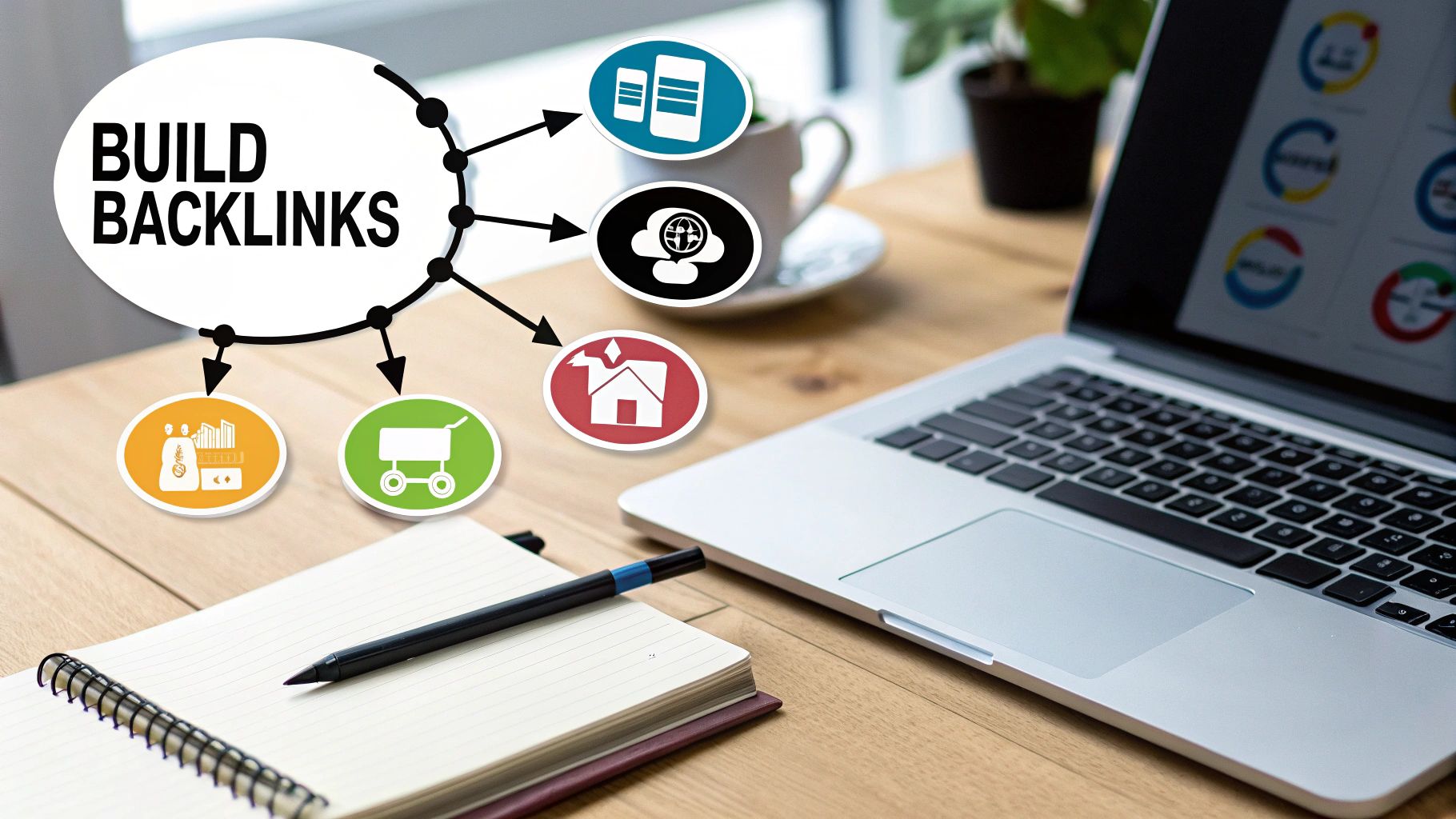
If on-page SEO is about making your shop tidy and presentable, earning backlinks is like getting trusted local figures to recommend it. Backlinks are essentially votes of confidence from other websites. When a reputable site links to your content, it signals to Google that your page is valuable and trustworthy a powerful endorsement that can significantly lift your rankings.
The days of chasing hundreds of low-quality links are long gone. Today, the game is all about quality over quantity. A single link from a highly authoritative, relevant website can deliver more SEO impact than a thousand spammy, irrelevant ones ever could.
This section moves beyond the vague advice of “just write great content.” We’ll dive into proactive, ethical strategies for earning links that genuinely matter. It’s about being strategic, not just lucky.
Find Your Competitors’ Best Links
One of the smartest ways to start is by analysing where your top competitors get their links. This isn’t about copying their every move; it’s about uncovering the patterns and opportunities they’ve already found.
Imagine you run a local gardening service in Surrey. You can use SEO tools to discover which high-authority gardening blogs, local news sites, or community forums are linking to your competitors. This hands you a ready-made list of potential targets that are already interested in your niche.
Once you have this list, you can dig deeper:
- Why did they link to my competitor? Was it for a specific how-to guide, a unique tool, or a compelling case study?
- Can I create something even better more comprehensive, more up-to-date, or more visually appealing?
- Can I then reach out to that same website and present them with my superior resource?
This approach takes the guesswork out of outreach by focusing on sites that have already shown a willingness to link to businesses just like yours.
Create Genuinely Link-Worthy Assets
You can’t expect people to link to average content. To earn authoritative backlinks, you need to create “link-worthy assets” pieces of content so valuable that other people feel compelled to reference and share them.
This doesn’t always mean a 5,000-word blog post. Consider creating:
- Original Data or Research: Conduct a survey on local gardening trends in Surrey and publish the findings. Journalists and bloggers love citing fresh data.
- An In-Depth “Ultimate Guide”: Create the single best resource on a topic, like “The Ultimate Guide to Container Gardening for Small UK Patios.”
- A Free Tool or Calculator: Develop a simple online tool, like a “Frost Date Calculator for UK Gardeners” or a “Lawn Feed Calculator.”
These assets provide genuine utility, making them natural magnets for links. They are the foundation of any solid outreach campaign and are a core part of what we explore when discussing the role of backlinks in a modern SEO strategy.
The key is to shift your mindset from “writing a blog post” to “creating a resource.” A resource solves a problem so completely that it becomes the go-to reference on that topic.
Leverage Broken Link Building
Broken link building is a classic, highly effective technique. The process is simple: you find a broken link (one that leads to a 404 error page) on another website and offer your own content as a perfect replacement.
It’s a genuine win-win. You help the site owner fix an error, improving their user experience, and in return, you get a relevant, high-quality backlink.
Here’s a simple way to approach it:
- Find a resource page or in-depth blog post on a high-authority site in your niche.
- Use a browser extension like Check My Links to scan the page for broken links.
- If you find one, use a tool like the Wayback Machine to see what the dead link was about.
- If you have a similar piece of content on your own site, reach out to the website owner with a helpful email.
Your outreach can be straightforward and friendly, simply pointing out the broken link and suggesting your content as a working alternative.
Frequently Asked Questions
When you first start trying to climb Google’s rankings, a lot of questions come up. The world of SEO can feel like a maze of jargon and conflicting advice, but getting to grips with the core ideas is simpler than you think. Here, we tackle some of the most frequent queries we hear from businesses, offering straight-talking answers to help you sidestep common hurdles and make smarter moves.
1. How long does it take to see results from SEO?
Patience is key. For a new website or a competitive industry, it can take 6 to 12 months to see significant, lasting improvements in your Google rankings. For less competitive areas, you might see movement in 3 to 4 months. SEO is a long-term strategy; quick wins are rare, but consistent effort in content, technical health, and link building pays off.
2. Is SEO a one-time task?
Absolutely not. SEO is an ongoing process. Google’s algorithms are constantly updated, your competitors are always working to outrank you, and new search trends emerge all the time. To maintain and improve your Google rankings, you need to consistently create new content, update old pages, build links, and monitor your technical performance.
3. What’s more important: on-page SEO or off-page SEO?
You need both, but you should always start with on-page SEO. Your on-page SEO (content, keywords, site structure, user experience) is the foundation. Trying to build backlinks (off-page SEO) to a poorly optimised site is like trying to fill a leaky bucket. Get your own house in order first, then build your authority with off-page strategies.
4. Do I need a big budget to improve my Google rankings?
While a budget for professional tools (Ahrefs, SEMrush) and expert help can dramatically speed up results, it is possible to make progress with no budget. Free tools like Google Search Console and Google Analytics are essential. However, what you save in money, you will need to invest in time for manual research, content writing, and outreach.
5. My rankings suddenly dropped. What should I do?
First, don’t panic. Check for recent Google algorithm updates that coincide with the drop. Next, log in to Google Search Console and check the ‘Manual Actions’ report for any penalties. Finally, analyse whether the drop was site-wide or affected specific pages. Common culprits include technical issues (like indexing problems), losing valuable backlinks, or major changes made to your website. A systematic check will help you identify the cause and form a recovery plan.
Navigating the complexities of SEO to get real, measurable results for your business can be a tough job. At GFC Tech, we specialise in ethical, transparent, and data-driven SEO strategies designed for small businesses in Surrey and beyond. Let us help you improve your Google rankings and grow your online presence.
Adam is a Founder of GFC Tech, a company dealing in SEO and website design and development services. Adam has been an SEO expert for the past 8 years and has been working with different companies in this field. He is an SEO consultant and a marketing strategist and works closely with his clients to ensure that his marketing plans and strategies provide them with the marketing advantages they need to grow their business. Adam’s main role is an SEO consultant, but he is also involved in all technical aspects. Adam also develops WordPress websites, designs them professionally and performs SEO for them so they can rank on the first page of google.


