

For any small business, email marketing is one of the most direct and reliable ways to build genuine, lasting customer relationships. It’s far more than just another item on your to-do list; it’s a powerful strategy that lets you speak personally to your audience, turning curious browsers into loyal advocates.
- Your Direct Line to Sustainable Growth
- Building Your First Email List the Right Way
- How to Craft Emails People Actually Open
- Using Segmentation to Boost Your Engagement
- Measuring the Metrics That Truly Matter
- Choosing Your First Email marketing Platform
- Frequently Asked Questions About Email Marketing
Your Direct Line to Sustainable Growth
Email is the one marketing channel you truly own and control. Think of it as having a quiet, one-to-one conversation with your customers instead of trying to shout over the noise in a crowded room. This direct connection is precisely what makes email marketing for small business an essential tool for sustainable growth.
Unlike social media, where you’re effectively renting space on someone else’s platform, your email list is a tangible business asset. It’s a curated list of people who have actively given you permission to contact them because they’re interested in what you have to say. That creates a unique opportunity to build trust and nurture relationships over time.
The Unmatched Power of Email ROI
For any small business owner keeping a close eye on the budget, return on investment is everything. And this is where email marketing truly excels. It consistently outperforms other channels simply because it’s incredibly cost-effective to get started and run.
A single, well-timed email can drive immediate sales, announce a new product, or simply keep your brand at the front of your customers’ minds. The numbers for UK businesses are particularly compelling. On average, companies see a return of £42 for every £1 spent on email marketing a figure that speaks volumes about its enduring value.
Building an email list gives you a direct, unfiltered communication channel that you own. It’s the difference between building your house on rented land versus owning the property outright.
This financial efficiency makes it the perfect strategy for businesses needing every pound to work as hard as possible. You don’t need a huge budget to see significant results. For more ideas, you can find other useful strategies in our guide to small business marketing tips.
Building Your First Email List the Right Way
Of all the marketing assets you’ll ever build, your email list is arguably the most powerful. It’s a direct line to people who have actively raised their hands and said, “Yes, I want to hear from you.” But before you can start sending emails they’ll love, you need to build that list ethically and with a clear plan.
Let’s get one thing straight: a small, engaged list of 100 genuine fans who actually look forward to your emails is infinitely more valuable than a list of 10,000 contacts who couldn’t care less. Quality trumps quantity, every single time. This is the bedrock of smart email marketing for small business.
Attracting Your Ideal Subscribers
The secret to a quality list is a simple, fair exchange. You offer something genuinely useful, and in return, someone gives you their email address. This is often called a “lead magnet,” but you can just think of it as a friendly handshake a small gift to kick off a great relationship. It doesn’t need to be complicated.
Here are a few simple but effective ideas that work wonders for small businesses:
- A Discount Code: An offer like “10% off your first order” is a classic for a reason. It’s a direct, immediate incentive for anyone already thinking about making a purchase.
- A Helpful Checklist: Are you a landscaper? Offer a “Seasonal Garden Prep Checklist.” A local bakery? How about a PDF on “5 Tips for Baking the Perfect Scone”?
- Early Access: Give subscribers first dibs on new products or upcoming sales. A little bit of exclusivity makes people feel like valued insiders.
Once you’ve got your offer sorted, make it dead simple for people to sign up. Place clear, straightforward sign-up forms in strategic spots on your website, like the footer, at the end of a blog post, or as a subtle pop-up that doesn’t get in the way.
An email list isn’t just a collection of contacts; it’s a community you’re building. Nurture it with real value, and it will become the foundation of your business’s growth.
Don’t forget your social media, either. It’s a fantastic tool for list growth. Instead of just posting about your products, regularly promote your freebie. A simple post like, “Want our free guide to perfect sourdough? Sign up for our newsletter!” can drive a steady stream of new, interested subscribers.
Understanding Consent and GDPR
For any business operating in the UK, understanding data protection is non-negotiable. The General Data Protection Regulation (GDPR) lays down the rules for how you collect and handle personal data, including email addresses. Don’t let the acronym intimidate you; its core principle is simple: consent.
You must have clear, explicit permission from someone before you can send them marketing emails. That means you can’t just scrape email addresses from websites or add contacts from business cards to your marketing list without their say-so.
Here’s what that looks like in practice:
- No Pre-ticked Boxes: Your sign-up forms must require people to actively tick a box to opt in. You can’t have it checked for them by default.
- Be Clear: Tell people exactly what they’re signing up for. For example, “Sign up for our weekly newsletter for recipes and special offers.”
- Easy to Unsubscribe: Every single marketing email you send must have a clear and easy-to-find unsubscribe link. No exceptions.
Building your list the right way from day one ensures you have an audience that genuinely wants to hear from you and keeps your business compliant. It all comes down to trust, which is the cornerstone of any lasting customer relationship.
How to Craft Emails People Actually Open
Once you have an engaged list of subscribers, the real work begins: sending them emails they genuinely want to read. The trick is to move beyond generic newsletters and make your brand a welcome presence in their inbox, not just another piece of digital noise. Think of your email as a mini-story with a beginning, middle, and end.
The subject line is your movie trailer it has one job: to spark enough curiosity to get them through the door. It’s no surprise that 47% of email recipients open emails based on the subject line alone. A great one is intriguing and clear, hinting at the value waiting inside without giving everything away.
Inside, the email body is the main feature. This is where you deliver on the promise of your subject line, building a connection and guiding your reader towards a specific action.

Finding Your Authentic Brand Voice
The most successful email marketing for small business feels personal and human. Your brand voice is simply the personality your business takes on in its writing. Are you witty and informal, or are you more professional and reassuring?
Finding that voice starts with truly understanding your audience. A local bakery, for instance, might use a warm, friendly tone filled with delicious descriptions. An IT consultant, on the other hand, would adopt a more authoritative, helpful voice. Consistency is everything; this personality should shine through in every single email you send.
Your brand voice isn’t just about what you say, but how you say it. It’s the consistent personality that makes your emails instantly recognisable and builds a real connection with your readers.
This voice should permeate everything from your subject line to your sign-off. By being authentic, you build trust and make your emails feel less like marketing and more like a genuine conversation.
Structuring Content That Converts
A well-structured email guides the reader effortlessly from opening the message to taking action. It respects their time by being scannable and easy to digest. Nobody has time for walls of text.
Here’s a simple structure you can adapt for almost any email you send:
- An Engaging Opener: Kick things off with a strong first sentence that hooks the reader. This could be a question, a surprising fact, or a short personal anecdote.
- Valuable Body Content: Use short paragraphs and bullet points to break up your text. This is where you educate, entertain, or inform. Visuals like photos or GIFs can enhance your message, but don’t rely on them entirely some users might have images turned off.
- A Clear Call-to-Action (CTA): End every email with a clear, singular instruction. Don’t confuse readers by asking them to do three different things. A button with action-oriented text like “Shop the Sale Now” or “Read the Full Story” works wonders.
For more detailed advice on creating impactful content, our guide on email marketing best practices offers plenty of additional tips.
Using Segmentation to Boost Your Engagement
Sending the same email blast to everyone on your list is like a shopkeeper shouting one identical message at every person who walks in the door. A few might listen, but most will just tune you out. This is where you move beyond one-size-fits-all emails and start having smarter, targeted conversations that actually get results.
Welcome to the world of segmentation. Think of it as organising your shop by aisle. You wouldn’t put fishing gear next to the bakery, would you? Segmentation is the same idea for your email list grouping subscribers so you can send them messages they genuinely care about.
When you send relevant content, your subscribers feel understood. That simple act builds trust, deepens the customer relationship, and dramatically boosts the impact of your email marketing for small business efforts.
How to Group Your Subscribers
Getting started with segmentation is much easier than it sounds. You can begin with a few simple groups based on information you probably already have. The goal is to go from one big, general list to several smaller, more focused ones.
Here are a few practical ways to segment your audience:
- Purchase History: Group together customers who have bought from you before. You could have one segment for first-time buyers and another for loyal, repeat customers who might appreciate an exclusive offer.
- Interests: Did someone sign up for your newsletter after reading a blog post on a specific topic? They’ve just told you what they’re interested in. Group them with others who share that interest.
- Engagement Level: Create a segment of your most active subscribers the ones who open and click on almost everything. You can also create a separate group for subscribers who haven’t engaged in a while, letting you send a targeted campaign to win them back.
The Power of Simple Personalisation
Once your segments are in place, you can start personalising your emails. This goes way beyond just using someone’s first name in the subject line (though that’s a great start). Real personalisation is about making the entire email feel like it was written just for them.
Personalisation turns a monologue into a dialogue. It shows your customers that you’re not just broadcasting a message; you’re listening to what they need and responding directly to them.
For example, you could send an email to a segment of past customers recommending products similar to what they’ve bought before. Or, you might send a special welcome discount to a segment of new subscribers who haven’t made a purchase yet. These small, thoughtful touches make your subscribers feel seen and valued, which is the secret to building long-term loyalty.
In the UK, these kinds of strategies are becoming more critical than ever. As of 2025, nearly three-quarters (73%) of small and medium-sized businesses were concerned about their marketing effectiveness, yet email is still the go-to tool for its sheer reach. Segmentation is what turns that reach into real engagement. You can discover more insights about these UK small business marketing trends on constantcontact.com.
Measuring the Metrics That Truly Matter
Sending emails is one thing; knowing if they’re actually working is where the real growth happens. This is the part of email marketing for small business where you stop guessing and start making smart, data-driven decisions. Once you get your head around a few key metrics, you can turn your email campaigns from a shot in the dark into a reliable engine for growth.
Think of these numbers as the vital signs of your email marketing’s health. They tell you what’s working, what isn’t, and exactly where you can improve. For example, a high open rate but a low click-through rate tells a very specific story: your subject line was great, but the content inside didn’t convince your reader to take the next step.
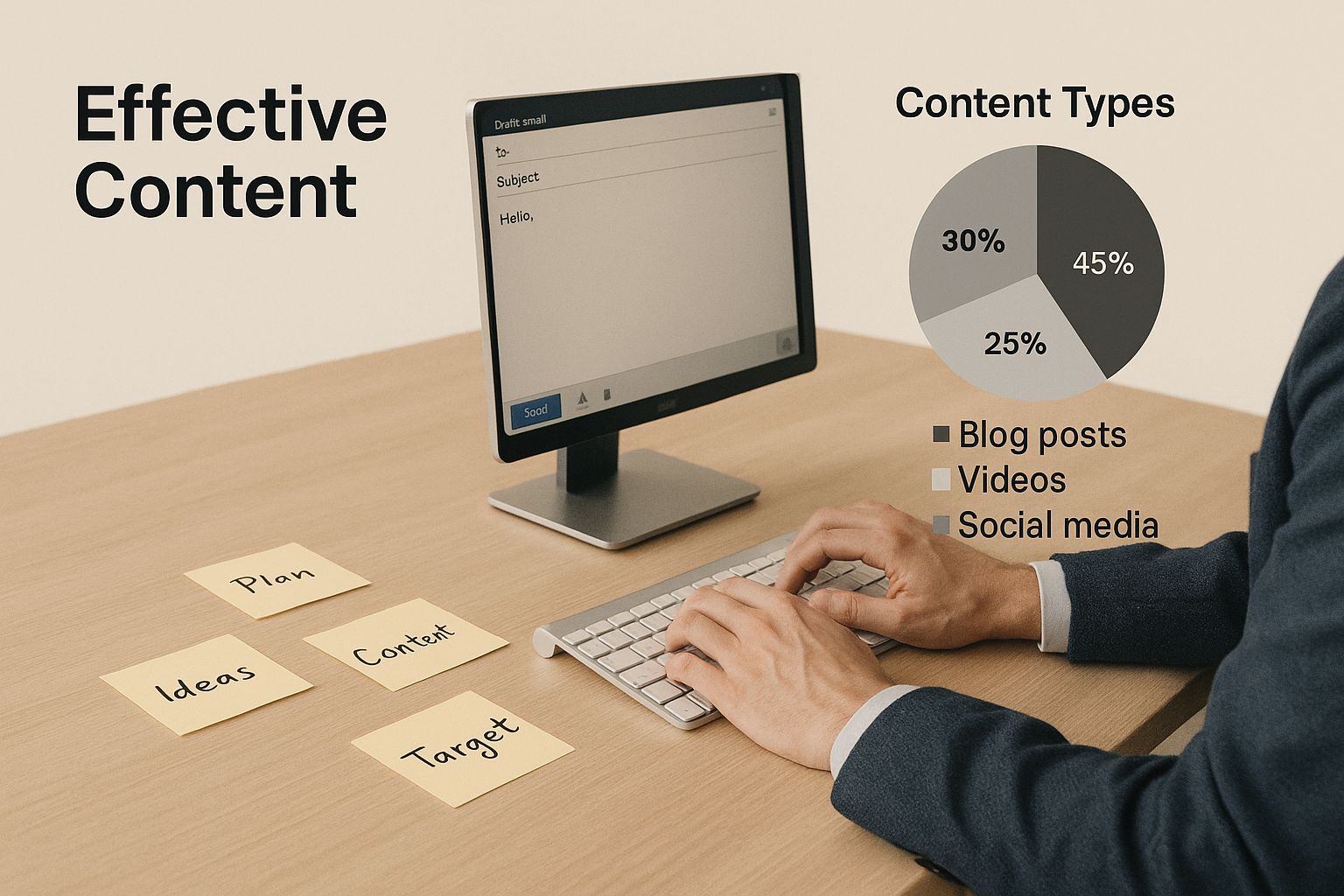
This really drives home the point that the real power of email lies in delivering content that connects with people enough to make them act.
Key Metrics to Watch
You don’t need to track dozens of different numbers to understand how your campaigns are doing. For most small businesses, focusing on a handful of core metrics will give you all the insight you need to make meaningful improvements.
- Open Rate: This is the percentage of subscribers who opened your email. It’s your first signal of how well your subject line and sender name are grabbing attention in a crowded inbox.
- Click-Through Rate (CTR): This measures the percentage of people who clicked on at least one link inside your email. It’s a direct measure of how engaging your content and call-to-action were. A good CTR means your message hit the mark.
- Conversion Rate: This is the ultimate goal. It tracks the percentage of subscribers who clicked a link and then completed the action you wanted them to, like making a purchase or filling out a form. For a deeper look at tying your marketing efforts to actual sales, check out our guide on how to measure marketing ROI.
- Unsubscribe Rate: This is the percentage of people who opt out of your list after receiving an email. A low rate (below 0.5% is normal) isn’t a bad thing; it just means people who aren’t a good fit are self-selecting out, which keeps your list healthy. If it starts to climb, it might be a sign you’re sending too frequently or the content isn’t relevant anymore.
Key Email Marketing Metrics Explained
To make sense of it all, here’s a quick breakdown of what each of these core metrics really tells you about your campaigns and your business.
| Metric (KPI) | What It Measures | What It Means for Your Business |
|---|---|---|
| Open Rate | The percentage of recipients who opened your email. | Shows the effectiveness of your subject line and brand recognition. A good open rate means you’ve earned attention. |
| Click-Through Rate (CTR) | The percentage of openers who clicked on a link in your email. | Indicates how compelling your email content and call-to-action (CTA) are. This is a strong measure of engagement. |
| Conversion Rate | The percentage of recipients who completed a desired action (e.g., purchase, sign-up). | This is the bottom line. It directly measures how well your email is driving business goals and generating revenue. |
| Unsubscribe Rate | The percentage of recipients who opted out of your email list. | A high rate can signal content mismatch or email fatigue. A low, steady rate is a sign of a healthy, engaged list. |
By keeping an eye on these KPIs, you can move beyond just sending emails and start building a system that consistently delivers results.
Putting Your Data Into Context
Understanding industry benchmarks can also provide some useful context. The average email open rate is around 17.8%, and the average click-through rate (CTR) is about 2.65%. This means if you’re hitting those numbers, you’re on the right track. But remember, the most important benchmark is your own always aim to improve on your last campaign. You can learn more about these email marketing benchmarks at Mailerstack.
Your email data tells a story. A low click rate isn’t a failure; it’s feedback telling you to adjust your message, offer, or call-to-action for the next send. Listen to what the numbers are telling you, and you’ll be on the path to improvement.
Choosing Your First Email marketing Platform
Picking the right tool for your email marketing for small business can feel overwhelming. The market is packed with options, and every single one promises the world. The secret is to cut through the noise and focus on what your business actually needs right now, while still leaving yourself room to grow later on.
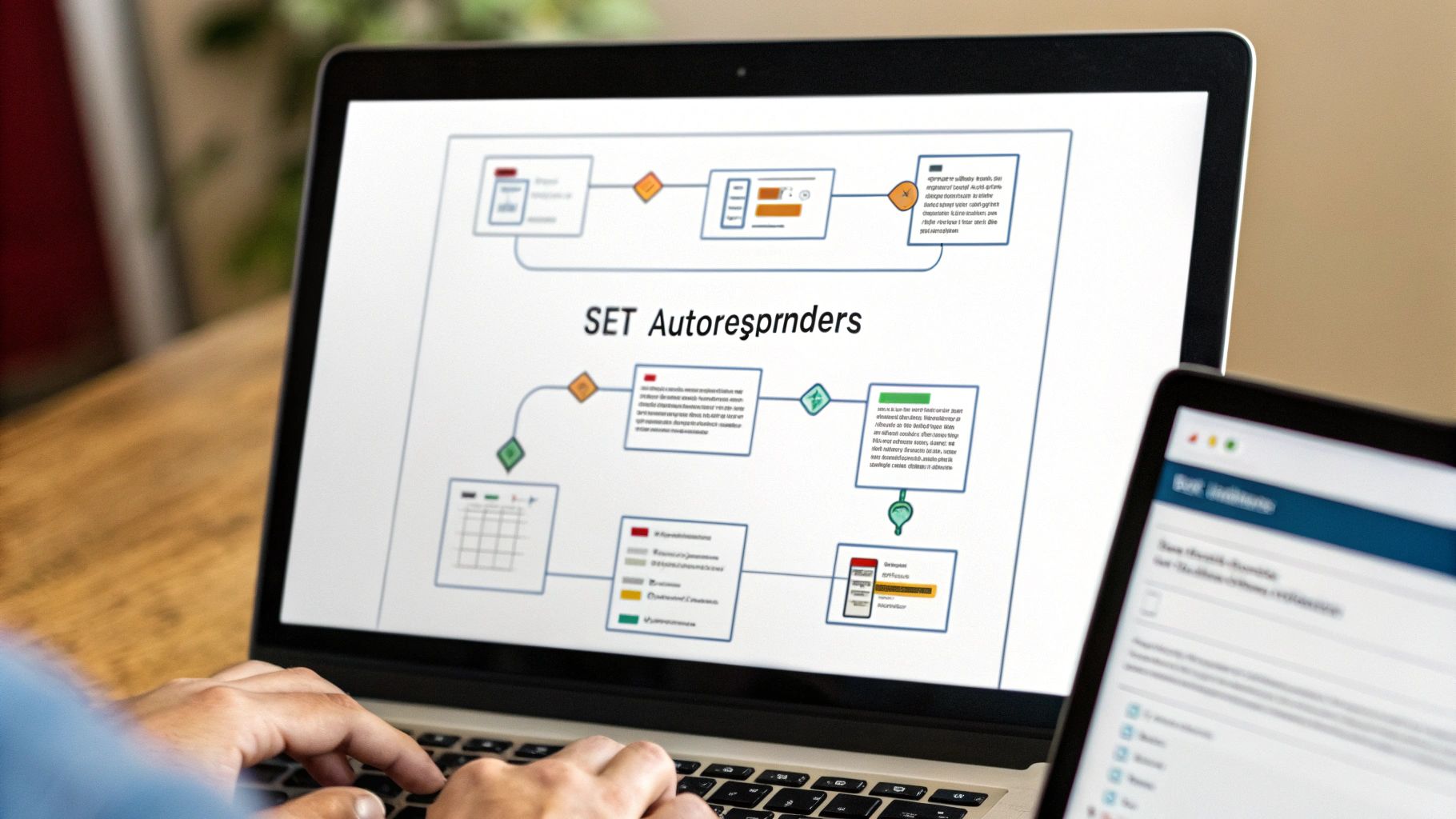
Instead of getting bogged down in endless feature lists, think about where you are on your business journey. Are you just starting out and need something that’s dead simple to use? Or are you growing fast and need a platform that can handle more advanced automation? Your email tool should feel like a helpful partner, not a complex puzzle you have to solve.
Core Features Every Small Business Needs
No matter which platform catches your eye, a few core features are absolutely non-negotiable. These are the fundamentals that will let you run effective campaigns from day one.
- User-Friendly Editor: You need a simple drag-and-drop editor. It should let you create professional-looking emails without ever having to touch a line of code.
- Essential Analytics: The platform must give you clear reports on your key metrics, like open rates and click-through rates. This data is the only way you’ll know what’s working and what isn’t.
- Segmentation Options: As we’ve already covered, the ability to group your subscribers is crucial for sending relevant messages. Even basic segmentation will give your results a significant boost.
Platform Tiers to Consider
To make your search a bit easier, let’s group the platforms into a few practical tiers based on what most businesses need. This way, you can match a tool’s strengths to your specific goals.
Best for Beginners
These platforms are all about simplicity and affordability. They’re perfect if you’re just sending your first newsletters and want a clean interface without a million confusing features. Look for generous free plans that let you start building your list without any upfront cost.
Ideal for Growing Businesses
Once you’ve got a steady stream of subscribers coming in, you’ll need more power. Tools in this category offer stronger automation, better segmentation, and can connect with other software you use, like your e-commerce platform.
Powerful Automation Tools
For businesses ready to build out more complex marketing funnels, these platforms are the top choice. They provide advanced workflows that can automatically send a series of emails based on what a user does, saving you huge amounts of time and driving sales on autopilot.
Frequently Asked Questions About Email Marketing
Here are answers to some of the most common questions small business owners have when getting started with email marketing.
1. How often should I send marketing emails?
There’s no single right answer, but for most small businesses, once a week is a great place to start. The goal here is consistency and value. It’s far better to send one genuinely useful email every week than three mediocre ones that your subscribers learn to ignore. Keep an eye on your open and unsubscribe rates to find the perfect rhythm for your audience.
2. Is email marketing still effective with social media so popular?
Absolutely. Think of it this way: on social media, you’re renting space on a platform controlled by an algorithm you can’t predict. Your email list, on the other hand, is an asset you own outright. It provides a direct and personal line to people who have explicitly asked to hear from you, which is why email marketing consistently delivers a higher return on investment.
3. Do I need a big budget for email marketing?
Not at all. One of its biggest advantages is its low cost. Many modern email marketing platforms offer free or very affordable plans designed specifically for small businesses, making it one of the most accessible and cost-effective marketing channels available.
4. What is the best day and time to send an email?
While many studies point to mid-week mornings as a sweet spot, the real best time is unique to your specific audience. The only way to know for sure is to test it. Send campaigns on different days and at different times, and then check your analytics to see which ones get the best open and click-through rates.
5. How do I stop my emails from going to the spam folder?
The most important rule is to only email people who have given you explicit permission to do so never buy an email list. Always use a reputable email marketing service, avoid spammy-sounding subject lines (like using ALL CAPS or too many exclamation marks), and make sure every email has a clear unsubscribe link. This builds a good sender reputation and keeps your messages in the inbox.
Ready to transform your online presence with expert guidance on email marketing, SEO, and web design? The team at GFC Tech specialises in helping Surrey-based small businesses thrive. Contact us today to start the conversation.
Adam is a Founder of GFC Tech, a company dealing in SEO and website design and development services. Adam has been an SEO expert for the past 8 years and has been working with different companies in this field. He is an SEO consultant and a marketing strategist and works closely with his clients to ensure that his marketing plans and strategies provide them with the marketing advantages they need to grow their business. Adam’s main role is an SEO consultant, but he is also involved in all technical aspects. Adam also develops WordPress websites, designs them professionally and performs SEO for them so they can rank on the first page of google.


