

When you start budgeting for your website, it’s easy to focus on the upfront design and build costs. But what about after it goes live? Keeping a website running smoothly isn’t a one-off task; it’s an ongoing commitment. In the UK, you can expect to budget anywhere from £50 to over £500 per month for proper website maintenance.
The exact figure really depends on what your site does. A simple blog or portfolio will naturally sit at the lower end of that scale, while a bustling e-commerce store with lots of moving parts will need a much bigger investment to keep it secure and efficient.
- Your Guide to UK Website Maintenance Costs
- What Your Maintenance Package Should Cover
- The Key Factors Driving Your Final Cost
- Comparing Typical UK Maintenance Packages
- Choosing Between DIY and Professional Services
- Budgeting for Long-Term Website Health
- Frequently Asked Questions About Website Maintenance Costs in the UK
Your Guide to UK Website Maintenance Costs

Figuring out the costs of keeping your website in top shape is one of the most important things any business owner can do. Think of it like a service plan for your car. It’s not a luxury; it’s a necessary investment to make sure your most valuable digital asset keeps running smoothly, securely, and efficiently.
Letting maintenance slide is a risky game. You could be leaving the door open to security threats, watching your site’s performance grind to a halt, and, worst of all, losing customers. This guide will give you a solid understanding of the costs involved, so you can set realistic expectations right from the start and budget accordingly.
Typical Monthly Maintenance Investments
The cost of website maintenance in the UK swings wildly depending on the type of site you have and how complex it is. A personal blog, for example, might only set you back between £4 and £40 a month.
But for a small business website, you’re more likely looking at £50 to £150 per month, depending on what’s included in the package. These figures cover the essentials like security updates, hosting, and having some technical support on hand when you need it. If you want to dive deeper, you can discover more insights about calculating website costs from this helpful guide.
Your website is your 24/7 salesperson. Investing in its health isn’t just an expense it’s a direct investment in your business’s growth, security, and online reputation.
To give you a clearer idea at a glance, we’ve put together a quick summary of what you can expect to pay based on your website’s main job.
Estimated Monthly Website Maintenance Costs in the UK by Website Type
Here’s a quick reference table that breaks down the typical monthly costs for different kinds of websites here in the UK.
| Website Type | Estimated Monthly Cost (GBP) |
|---|---|
| Personal Blog / Portfolio | £20 – £75 |
| Small Business / Brochure Site | £50 – £150 |
| Lead Generation Site | £150 – £400 |
| E-commerce Store (Small-Medium) | £250 – £600+ |
| Custom Web Application | £500+ |
As you can see, the more your website does especially if it handles transactions or custom functions the more you should plan to invest in keeping it healthy and secure.
What Your Maintenance Package Should Cover
To get a grip on the website maintenance cost uk businesses are quoted, you first need to know what you’re actually paying for. Think of a maintenance package less like an IT cost and more like a comprehensive service plan for your most valuable digital asset. It isn’t just about fixing things when they break; it’s about the proactive, behind-the-scenes work that stops problems from ever happening.
A good package cuts through the technical jargon to deliver real business benefits. It keeps your website fast, secure, and dependable, protecting both your investment and the trust you’ve built with your customers. Let’s break down the non-negotiable services that should be in any plan worth its salt.
Core Technical Health Services
At its heart, website maintenance is all about keeping your site’s engine finely tuned. This means a handful of critical, recurring jobs that shield it from digital threats and stop it from slowing down over time. Without these fundamentals, your site quickly becomes vulnerable and sluggish.
These are the absolute essentials that form the foundation of a healthy website:
- Software and Plugin Updates: The software your website runs on (like WordPress) and its plugins are always evolving. New updates patch security holes, squash bugs, and sometimes add new features. Ignoring them is like leaving your shop’s front door unlocked overnight.
- Regular Security Monitoring: This is your 24/7 digital security guard. It means actively scanning for malware, spotting suspicious activity, and blocking hacking attempts before they can do any real damage.
- Performance and Speed Checks: A slow website is a guaranteed way to lose visitors. Regular checks make sure your pages load in a snap, which not only keeps users happy but also gives your SEO rankings a welcome boost.
- Consistent Backups: This is your ultimate safety net. If your site ever gets hacked or a critical error takes it down, regular backups mean you can restore a clean, working version in minutes, minimising downtime and data loss.
Support and Foundational Costs
Beyond the technical tune-ups, a solid maintenance package must include the human element and the basic running costs. You need to know you can call on an expert when things go wrong, and the core infrastructure has to be rock-solid. These parts of the puzzle are just as vital as the technical checks.
The total website maintenance pricing in the UK is shaped by these crucial elements, including domain renewal, hosting, security, and technical support. For example, domain renewal can vary from £5 to £1,000 annually, while security measures can add between £150 and £800 per month to the bill, highlighting the importance of protecting your online presence. You can learn more about how these costs break down in this 2025 guide. Our guide to small business website maintenance also provides deeper insights into structuring a plan that works for you.
The Key Factors Driving Your Final Cost

The website maintenance cost uk businesses face is never a one-size-fits-all figure. You’ll see quotes ranging from a modest £100 a month to well over £1,000, and that huge gap exists for a simple reason: every single website has different needs. Think of it like maintaining a car. Servicing a small family run-around is a world away from the complex, costly job of keeping a high-performance commercial lorry on the road.
A few key variables directly shape your final quote. Getting your head around these factors will put you in a much stronger position when you talk to providers, helping you have more confident, informed conversations. When you know what drives the price up or down, you can find a maintenance plan that genuinely fits your business goals and your budget.
Website Complexity and Scale
Without a doubt, the single biggest factor pushing your costs up is the complexity of your website. A simple five-page brochure site with a contact form is straightforward to look after. A sprawling e-commerce store with hundreds of products, payment gateways, and customer accounts? That’s a different beast entirely.
More features simply mean more things that can potentially go wrong. E-commerce functions, membership portals, booking systems, and custom-built integrations all add layers that need regular checks and updates. The more intricate your site, the more time and specialist skill it takes to keep it secure and running smoothly.
A website’s complexity is the primary determinant of its maintenance cost. The more moving parts it has like payment systems, user accounts, or custom integrations the greater the investment required to keep everything secure and operational.
Technology and Platform
What your website is built on also plays a massive part in the cost. If your site runs on a popular Content Management System (CMS) like WordPress, you’re tapping into a huge world of plugins and themes. While this gives you amazing flexibility, it also means there are dozens of third-party bits of code that need constant updates to patch security holes.
On the flip side, a completely custom-built website might have fewer external parts to worry about, but it needs a developer with specialist knowledge of its unique code. That kind of niche expertise often comes at a higher hourly rate for any support or updates, which feeds directly into the maintenance bill. An unmaintained platform is also a huge security risk that can really hurt your search engine rankings over time. A regular technical review is the best way to spot these dangers; you can learn more about this by exploring our website SEO audit services.
Scope of Service and Support
Finally, the level of service you actually need will directly shape the price tag. Are you happy with support only during UK business hours, or does your business need a 24/7 emergency hotline for critical problems? The second option obviously requires more resources from an agency and will cost more.
Other things that affect the scope and the price include:
- Frequency of Updates: How often will you need someone to make content changes, add new blog posts, or update product pages?
- Proactive Monitoring: Is the plan just about fixing things when they break, or does it include proactive work to optimise performance and tighten security?
- Reporting: Do you need detailed monthly reports showing you the results of security scans, performance checks, and all the work that’s been completed?
Each one of these adds to the time and expertise required from your provider, which is ultimately what shapes the final cost of your package.
Comparing Typical UK Maintenance Packages
To get a real feel for the website maintenance cost UK businesses are looking at, it helps to see how agencies actually package up their services. You’ll rarely find a single, one-size-fits-all plan. Instead, most will offer a few different tiers, each designed for a specific type of website from a simple blog right through to a complex online shop.
Getting your head around these tiers is the key to making a smart decision. By comparing what’s included in a Basic, Business, or Premium plan, you can match your website’s needs to the right level of investment. It’s all about paying for what you genuinely need, without splashing out on extras that won’t make a difference to you.
This image gives you a bird’s-eye view of where the money typically goes in a maintenance budget.
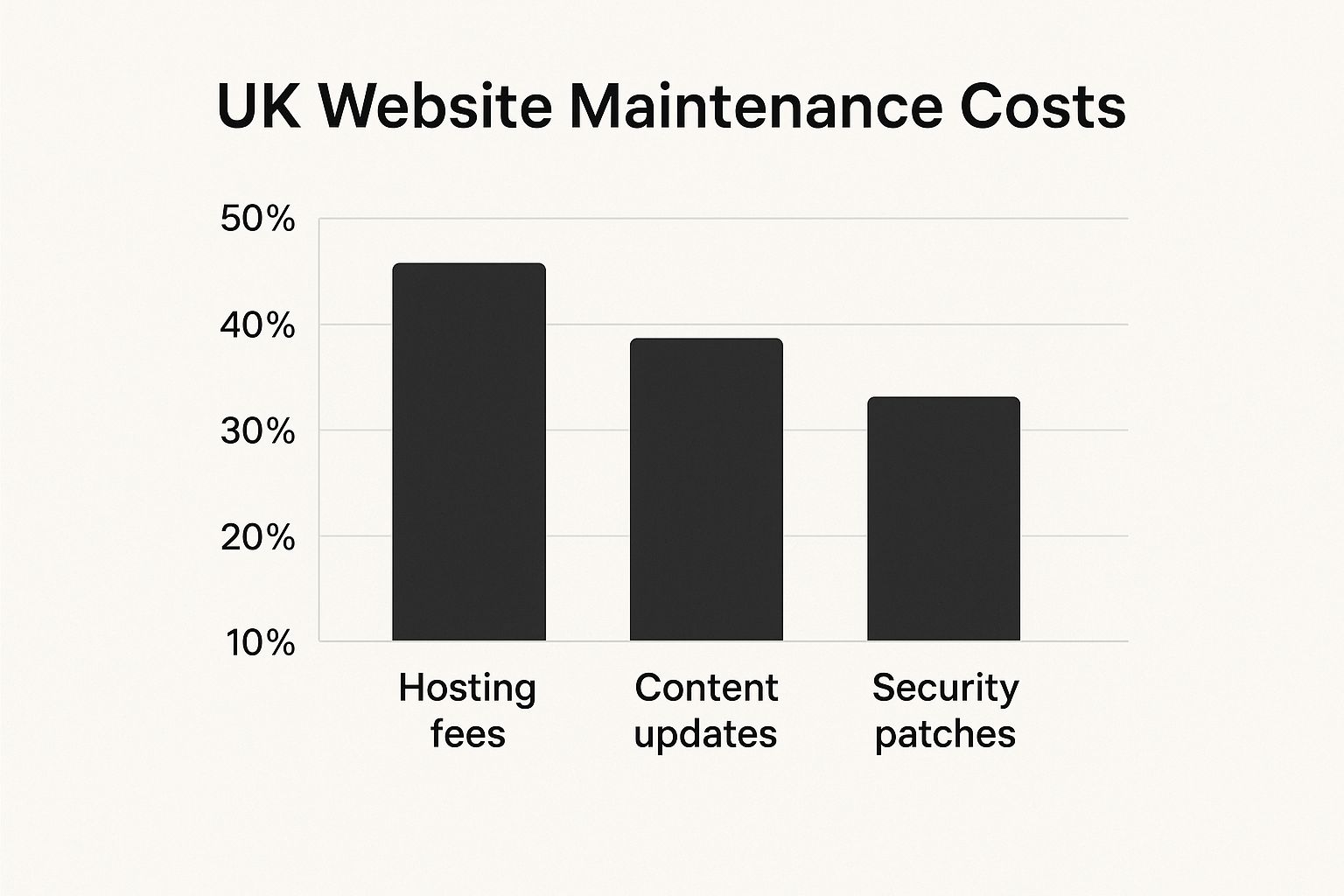
As you can see, the core technical stuff like hosting and security patches usually makes up the bulk of the cost. That’s because keeping your site healthy and online is the absolute number one priority.
Basic Plan for Simpler Sites
A Basic or “Starter” plan is your entry point. Think of it as the essential MOT for your site. It’s perfect for personal blogs, portfolios, or small brochure websites that don’t have any fancy functions. This plan covers the absolute fundamentals to keep things secure and running smoothly.
Typically, this package includes:
- Monthly software and plugin updates
- Daily or weekly website backups
- Basic security monitoring and malware scans
- Uptime monitoring to check the site is online
This level of service gives you that crucial peace of mind, knowing your digital foundations are protected from the most common threats. It’s a really affordable way to hand over the most critical technical jobs.
Business Plan for SMEs
The Business or “Growth” plan is easily the most popular choice for small to medium-sized businesses (SMEs). This tier is built for websites that are a key part of the marketing toolkit like lead generation sites or main company websites. It bundles in everything from the Basic plan but adds services that boost performance and give you direct support.
Expect to find services like:
- All Basic plan features
- Priority support via email or phone
- Performance and speed optimisation checks
- A set amount of monthly developer time for small content updates or fixes
This package takes a more proactive approach. It moves beyond just keeping the lights on to actively improving the user experience and giving you a helping hand when you need it. For most WordPress sites, this tier hits the sweet spot, something you can explore in more detail in our guide to WordPress maintenance services.
Premium Plan for E-commerce and Complex Sites
A Premium or “E-commerce” plan is tailored for websites where any downtime means an immediate loss of revenue. We’re talking online stores, custom web applications, or high-traffic membership sites. These are the business-critical digital assets that need the highest level of protection.
This top-tier plan is an investment in business continuity. It provides the highest level of proactive monitoring, security, and expert support to protect your most valuable digital assets and revenue streams.
This plan often includes advanced features such as:
- All Business plan features
- 24/7 emergency support and enhanced security firewalls
- Real-time backups for transactional data
- Staging environments for testing updates safely
- Dedicated account management and strategic advice
This comprehensive service ensures that complex, high-stakes websites remain fast, secure, and fully operational around the clock, protecting both your revenue and your reputation.
To give you a clearer picture, here’s how these plans typically stack up against each other.
Comparison of Typical UK Website Maintenance Packages
| Feature | Basic Plan (£50-£150/month) | Business Plan (£150-£400/month) | Premium/E-commerce Plan (£400+/month) |
|---|---|---|---|
| Core Software Updates | Monthly | Monthly | Weekly/As Needed |
| Website Backups | Weekly/Daily (off-site) | Daily (off-site & cloud) | Real-time/Hourly |
| Security Monitoring | Standard Malware Scans | Enhanced Scans & Firewall | Advanced Firewall & Proactive Threat Hunting |
| Uptime Monitoring | Included | Included (with faster alerts) | Included (with instant alerts) |
| Performance Checks | Basic scan on request | Monthly Speed Optimisation | Continuous Performance Monitoring |
| Technical Support | Email Support (standard response) | Priority Email & Phone Support | 24/7 Emergency Support |
| Developer Time | Not included | 1-2 hours/month for small tasks | 3+ hours/month or dedicated support |
| E-commerce Support | Not included | Not included | Included (payment gateways, SSL, etc.) |
| Staging Environment | Not included | Not included | Included |
| Reporting | Basic Monthly Report | Detailed Monthly Report | Custom Reports & Strategy Calls |
This table shows how the investment scales with the complexity and business-critical nature of your website. A small blog simply doesn’t need the same round-the-clock attention as a busy online store, and the pricing reflects that reality.
Choosing Between DIY and Professional Services
Sooner or later, every business owner faces a crossroads with their website: do you roll up your sleeves and manage it yourself, or hand the keys to a pro? This isn’t just about the website maintenance cost uk; it’s a decision that ripples through your time, stress levels, and the long-term health of your online presence. Each path has its own set of trade-offs, and it pays to think them through.
Going the Do-It-Yourself (DIY) route is tempting, mostly because it seems cheaper upfront. By not paying a monthly fee, you keep that cash in the business. But what you save in money, you pay for in time and a fair bit of technical know-how. It’s one thing to update a blog post, but it’s another thing entirely to fix a critical plugin conflict that’s just taken your whole site offline on a busy Monday morning.
Weighing the Pros and Cons
On the flip side, hiring a professional service brings expertise and peace of mind, but it’s a direct hit to the budget. You’re paying for a team’s experience, their specialist tools, and their ability to jump on problems before you even know they exist. This frees you up to actually run your business, knowing your digital shopfront is in safe hands. The right choice really boils down to your specific situation.
The decision to DIY or hire a professional isn’t just about money versus time. It’s a strategic choice about where your skills and focus can create the most value for your business.
A Checklist to Guide Your Decision
To figure out which way to go, ask yourself a few honest questions:
- Skills: Do I have the technical chops to update plugins, run backups, and troubleshoot a critical error when the pressure is on?
- Time: Realistically, how many hours can I dedicate to website maintenance each month without letting my core business suffer?
- Value: What is an hour of my time actually worth? Is it better spent on tech tasks or on winning new customers?
- Risk: What’s the potential cost to my business in lost sales or reputation if the website goes down and I can’t fix it fast?
- Tools: Do I have access to (and know how to use) premium tools for security scans, backups, and performance checks?
Your answers will quickly reveal which path makes the most sense for your resources and priorities right now.
Budgeting for Long-Term Website Health
It’s easy to see the website maintenance cost UK businesses face as just another running expense, but that’s a mistake. A much smarter way to think about it is as a strategic investment in your single most valuable digital asset. Just as you budget for rent or insurance, setting aside funds for your website’s upkeep ensures it stays secure, fast, and effective, preventing far more expensive emergencies down the line.
A simple rule of thumb that works well for many is to earmark a percentage of your initial website development cost for annual upkeep. Budgeting 15-25% of the original build cost per year is a common and effective guideline. This simple bit of financial planning turns maintenance from a reactive panic-buy into a predictable, manageable business overhead.
Adopting a Strategic Mindset
To make sure this investment is paying off, schedule a quarterly check-in on your maintenance plan and the reports you receive. This is your chance to confirm that the services still line up with your business goals and that you’re getting clear value for your money.
Neglecting maintenance isn’t a saving; it’s a debt that accrues interest. The hidden costs lost sales from a slow site, reputational damage from a security breach, or emergency repair fees will always outweigh a planned monthly investment.
By reframing maintenance as an investment in your digital storefront, you protect its value, ensure a positive user experience, and secure its ability to generate leads and revenue for years to come. It’s the smartest way to guarantee your website’s long-term success.
Frequently Asked Questions About Website Maintenance Costs in the UK
1. What is a typical monthly cost for website maintenance in the UK?
For a small business website, you can typically expect to pay between £50 and £150 per month. This usually covers essentials like software updates, security scans, and regular backups. For more complex sites like e-commerce stores, this can rise to £250 – £600+ per month to cover more intensive support and security needs.
2. Can I do website maintenance myself to save money?
You can, but it’s important to weigh the risks. While DIY maintenance saves on agency fees, it requires technical knowledge and a significant time commitment. Mistakes can lead to downtime or security breaches, which can be far more costly to fix. If you’re not confident troubleshooting technical issues, a professional plan offers peace of mind and expert support.
3. What is usually NOT included in a standard maintenance package?
Standard maintenance plans focus on the technical health and security of your site. They typically do not include content creation (like writing blog posts), SEO services, major design changes, or adding new features. These are usually quoted as separate projects or part of a larger digital marketing retainer.
4. Why do e-commerce sites cost more to maintain?
E-commerce websites are more complex. They handle customer data, process payments, and have more moving parts (like plugins for shipping and inventory). This increases the security risk and the technical work required to keep everything running smoothly. Any downtime directly results in lost revenue, so they require more proactive monitoring and specialised support.
5. Is it cheaper to pay for website maintenance annually?
Yes, most agencies in the UK offer a discount if you pay for a year of maintenance upfront. This can often save you 10-20% compared to paying monthly. If your cash flow allows, it’s a great way to reduce the overall cost while securing your website for the entire year.
Keeping your website healthy and secure isn’t just a technical task; it’s essential for growing your business. At GFC Tech, we provide transparent, reliable WordPress maintenance and SEO services designed for small businesses across Surrey. Contact us today to secure your digital asset.
Adam is a Founder of GFC Tech, a company dealing in SEO and website design and development services. Adam has been an SEO expert for the past 8 years and has been working with different companies in this field. He is an SEO consultant and a marketing strategist and works closely with his clients to ensure that his marketing plans and strategies provide them with the marketing advantages they need to grow their business. Adam’s main role is an SEO consultant, but he is also involved in all technical aspects. Adam also develops WordPress websites, designs them professionally and performs SEO for them so they can rank on the first page of google.


